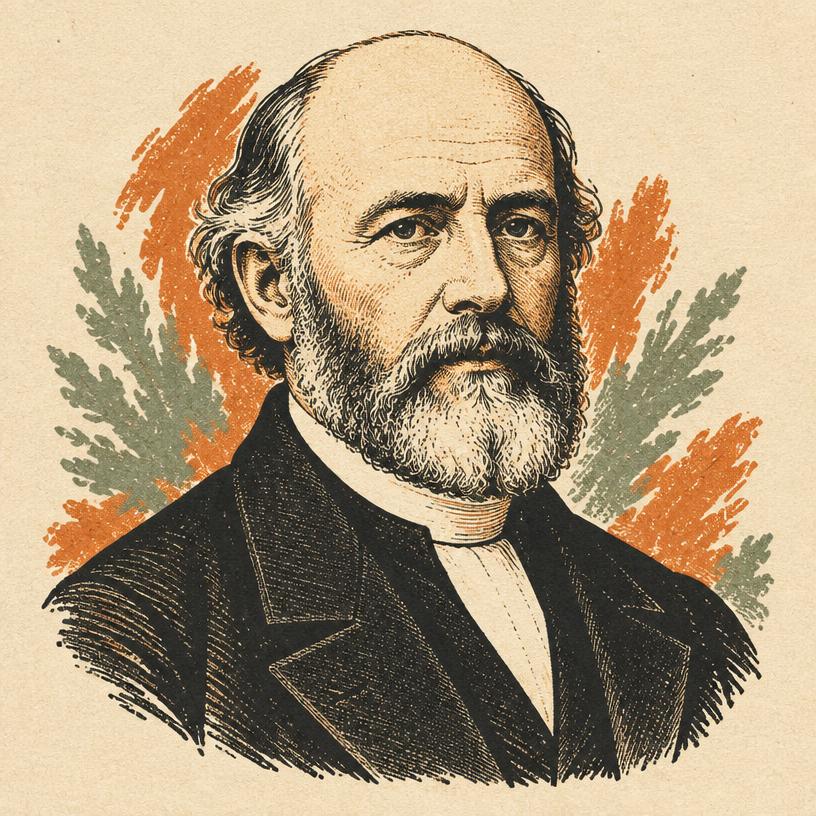
Original editorial artwork; not a historical photograph.
Legacy · 1817–1889
Warren Felt Evans
A former Methodist minister who wrote the first books to give mental healing a systematic literature.
Evans came to Quimby as a patient, recovered, and then spent two decades turning what he had learned into books that drew on Swedenborg, idealist philosophy, and Christian theology.
He was writing on mental healing before the movement had a name, and his volumes gave later teachers a vocabulary to build on.
1869
first book published
6
major volumes
Bridge
from Swedenborg to New Thought
Ideas associated with the work
- Mind as the medium of healing
- Correspondence between inner and outer
- Faith as a mental discipline
- Philosophy joined to practice
Start with the most famous book
The Mental Cure
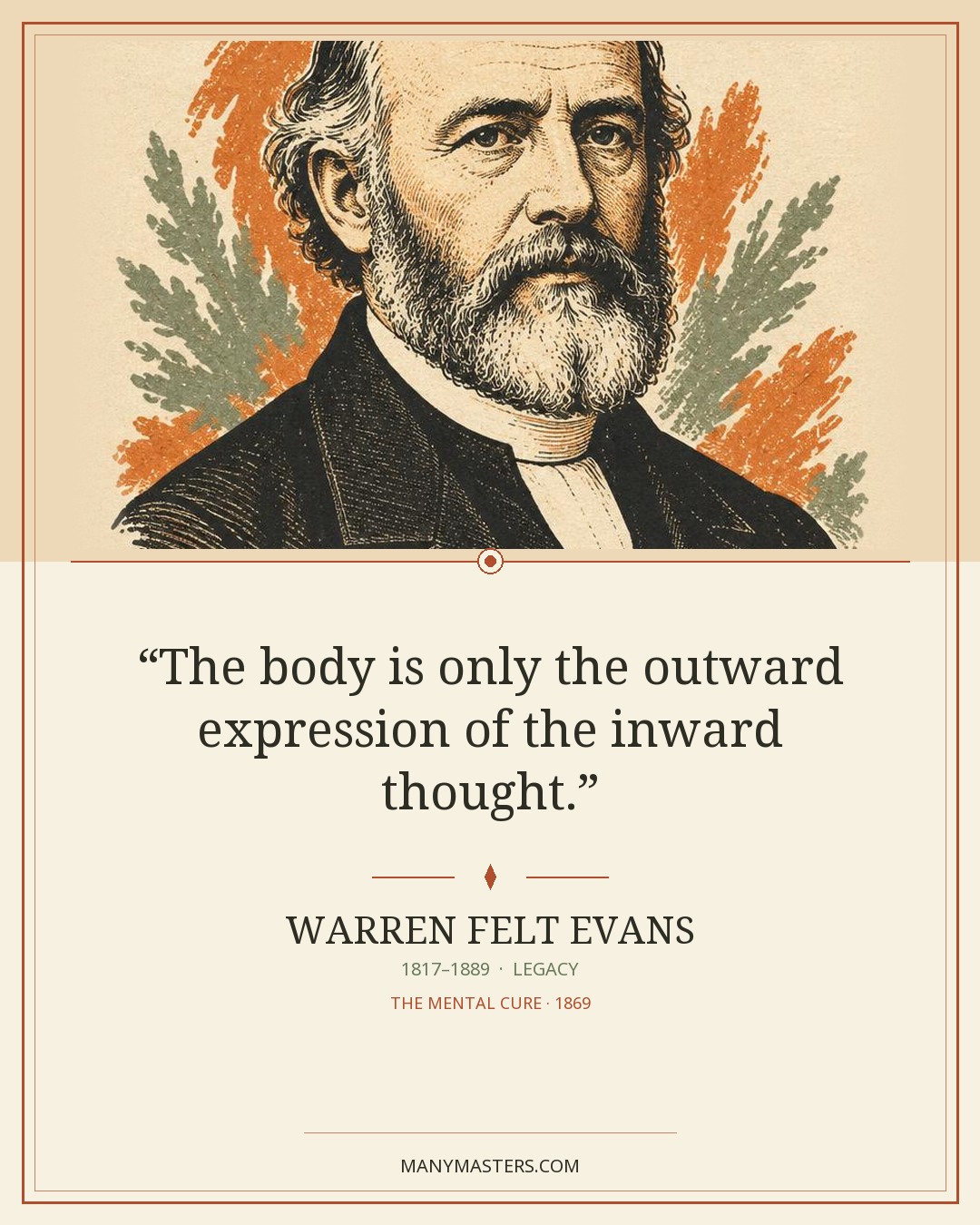
“The body is only the outward expression of the inward thought.”
— Warren Felt Evans, The Mental Cure (1869)
Why this master matters
Evans wrote the first real books of the movement. A Methodist minister turned Swedenborgian, he gave mental healing a vocabulary and a shelf of titles years before anyone else, which is why the tradition arrived with a literature already in place.
Ideas in practice
Understand the teaching.
01
Philosophy before technique
Evans insisted that practice rests on a worldview. He argued the case rather than simply prescribing exercises.
02
Correspondence
Borrowing from Swedenborg, he read outer conditions as expressions of inner states — the conceptual backbone of everything that follows.
03
Writing as transmission
By putting the ideas in print, he let the movement travel far beyond any one practitioner's consulting room.
Signature works
Start with the books.
Explore a short reading list, with purchasing links that support ManyMasters.
Start here
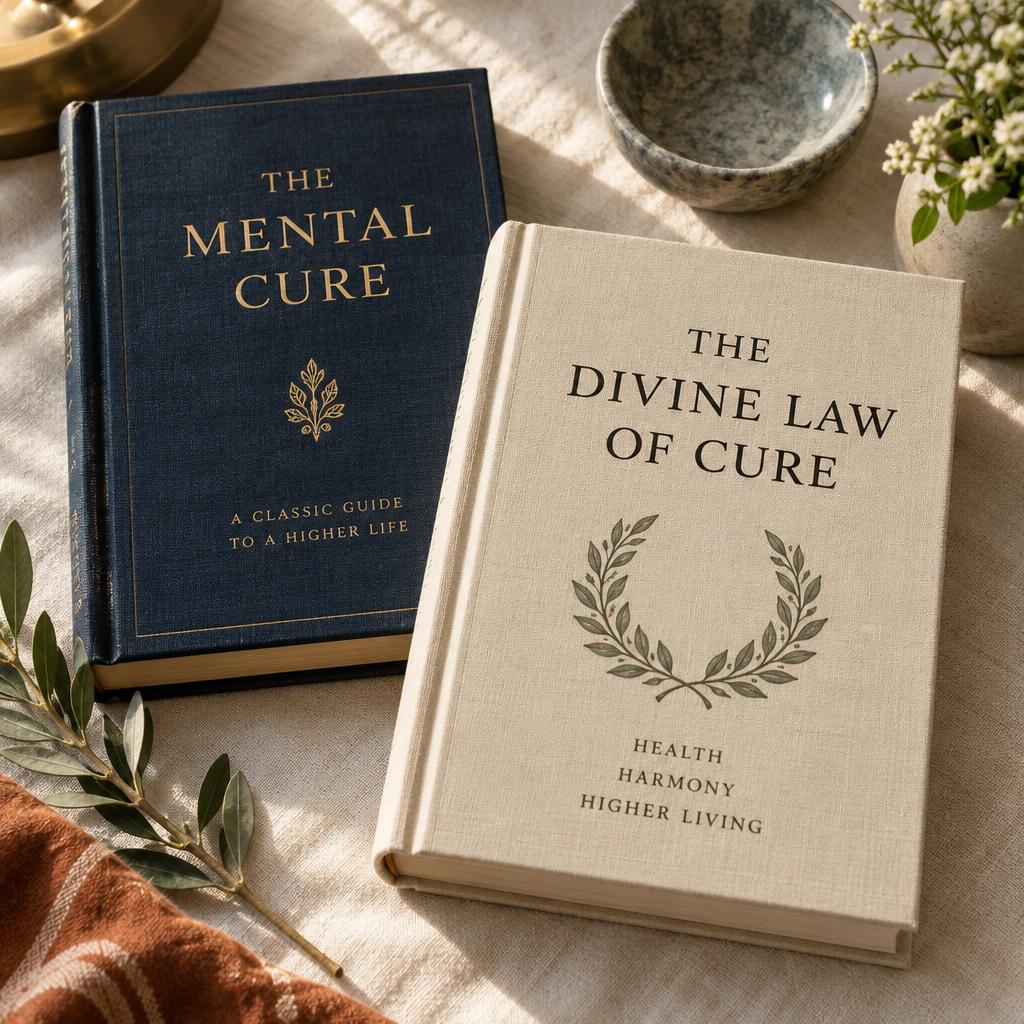
The Mental Cure
The first systematic book of the tradition, and still the clearest statement of its early philosophy.
Explore editionsChoosing an edition
These titles are long out of copyright, so editions range from careful annotated reprints to hasty print-on-demand scans. Before buying, check that the listing names a publisher, shows a readable interior sample, and keeps the original chapter structure intact.
Affiliate disclosure: ManyMasters may earn a commission from qualifying purchases, at no additional cost to you.
Choose your path
Read for what you need now.
Historical context
This work belongs to the late-nineteenth and early-twentieth century New Thought movement. Read it as historical writing on belief, attention and character rather than as medical, psychological or financial advice, and treat the biographical stories that grew up around these figures as tradition rather than documented fact.