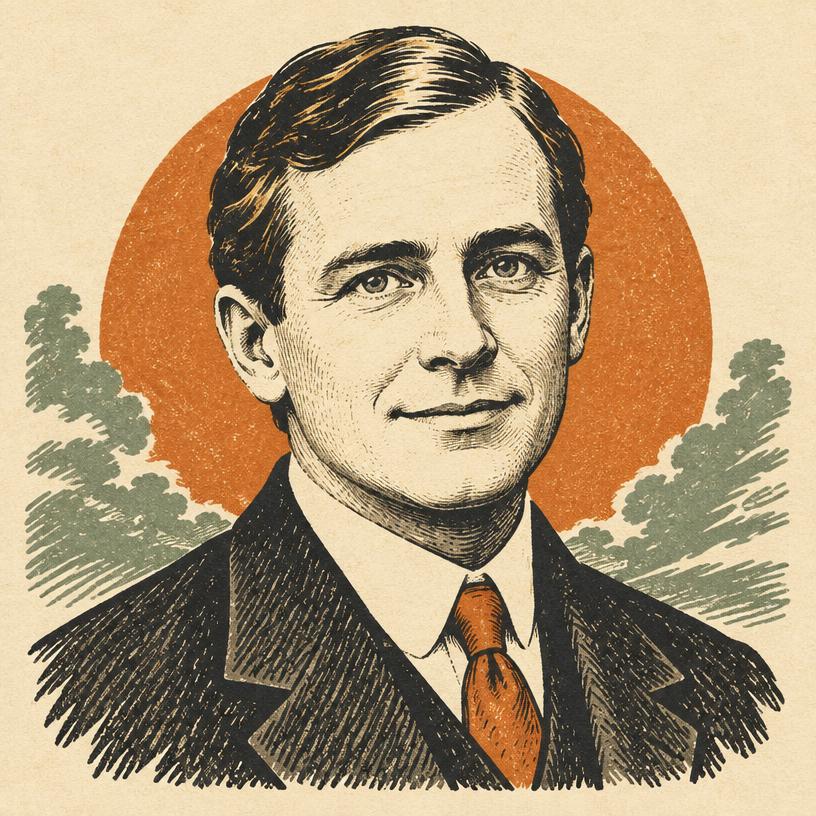
Original editorial artwork; not a historical photograph.
Legacy · 1866–1958
Ralph Waldo Trine
The writer who carried New Thought out of the seminary and onto the popular bestseller list.
Trine's In Tune with the Infinite sold in the millions and was read far outside metaphysical circles; Henry Ford credited it with shaping his outlook. His prose was warm and plain, aimed at ordinary readers rather than students of doctrine.
He wrote steadily for half a century on health, prosperity, and what he called the law of attraction long before the phrase became a slogan.
1897
In Tune with the Infinite
2M+
copies in circulation
20+
books published
Ideas associated with the work
- Living in tune with a larger life
- Thought as a formative force
- Health and serenity as linked
- Plain language for large ideas
Start with the most famous book
In Tune with the Infinite
“In tune with the Infinite, and the fullness of peace, power, and plenty follows.”
— Ralph Waldo Trine, In Tune with the Infinite (1897)
Why this master matters
Trine took the movement out of the seminar room and into the living rooms of ordinary readers. In Tune with the Infinite sold in the millions, reached Henry Ford, and set the warm, accessible tone that popular self-help has used ever since.
Ideas in practice
Understand the teaching.
01
Alignment over effort
Trine describes success as a matter of getting in tune rather than forcing outcomes — a quieter posture than the striving literature that came after him.
02
Peace is practical
He treats inner calm as a working condition for good judgment, not a reward for having already succeeded.
03
Plain language wins
His prose avoids jargon entirely, which is precisely why the ideas travelled.
Signature works
Start with the books.
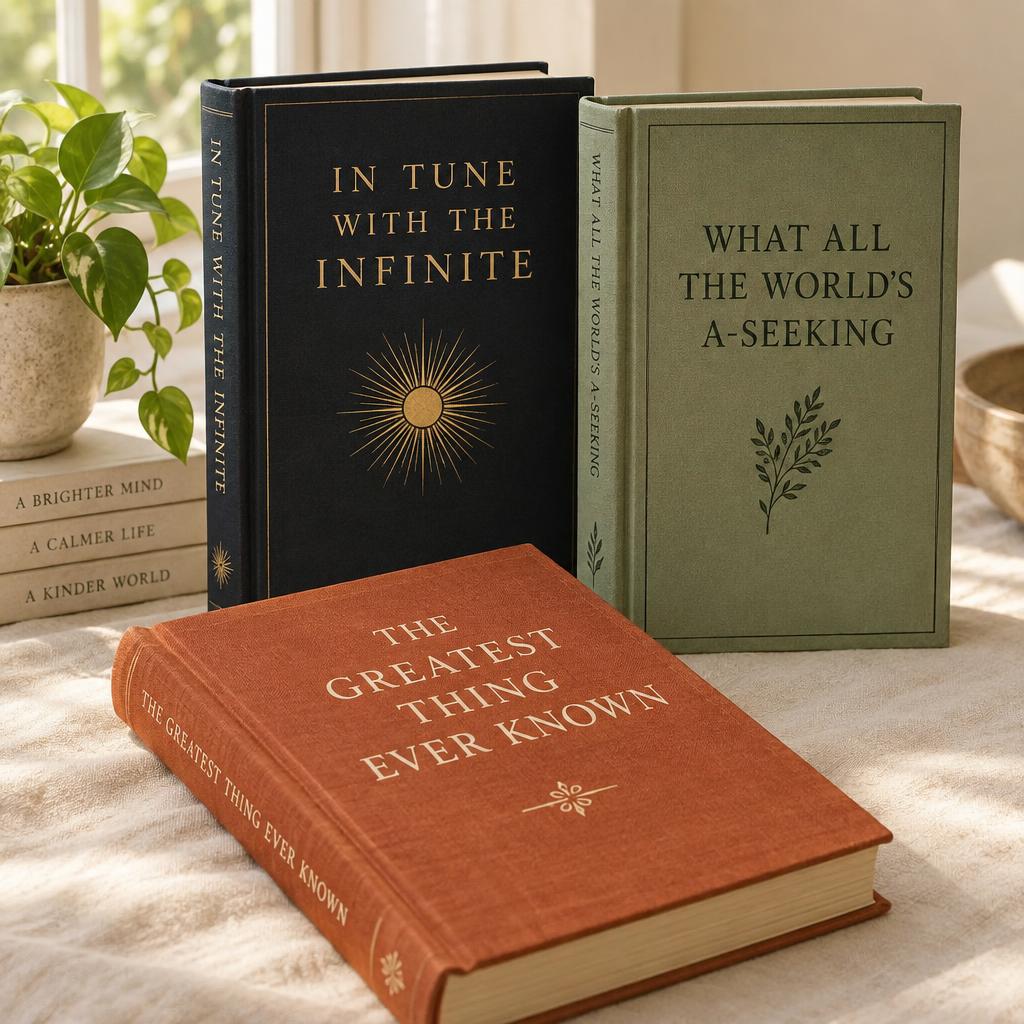
Explore a short reading list, with purchasing links that support ManyMasters.
Start here
In Tune with the Infinite
The book that made these ideas mainstream — calm, generous and still remarkably easy to read.
Explore editionsChoosing an edition
These titles are long out of copyright, so editions range from careful annotated reprints to hasty print-on-demand scans. Before buying, check that the listing names a publisher, shows a readable interior sample, and keeps the original chapter structure intact.
Affiliate disclosure: ManyMasters may earn a commission from qualifying purchases, at no additional cost to you.
Choose your path
Read for what you need now.
Historical context
This work belongs to the late-nineteenth and early-twentieth century New Thought movement. Read it as historical writing on belief, attention and character rather than as medical, psychological or financial advice, and treat the biographical stories that grew up around these figures as tradition rather than documented fact.