
Original editorial artwork; not a historical photograph.
Legacy · 1849–1925
Emma Curtis Hopkins
Known as the teacher of teachers: the instructor behind a remarkable share of the movement's next generation.
Hopkins broke with Eddy and opened her own seminary in Chicago, ordaining hundreds of students at a time when few women led religious institutions. Her classroom produced the Fillmores, Ernest Holmes, Malinda Cramer, Annie Rix Militz, and many others.
Her teaching was mystical and compact, built on a small number of principles repeated until they became habits of thought.
1886
Chicago seminary opened
100s
of students ordained
Teacher
of the movement's founders
Ideas associated with the work
- The high watch of steady attention
- Denial and affirmation as practice
- Scripture as an inner map
- Training teachers, not followers
Start with the most famous book
Scientific Christian Mental Practice
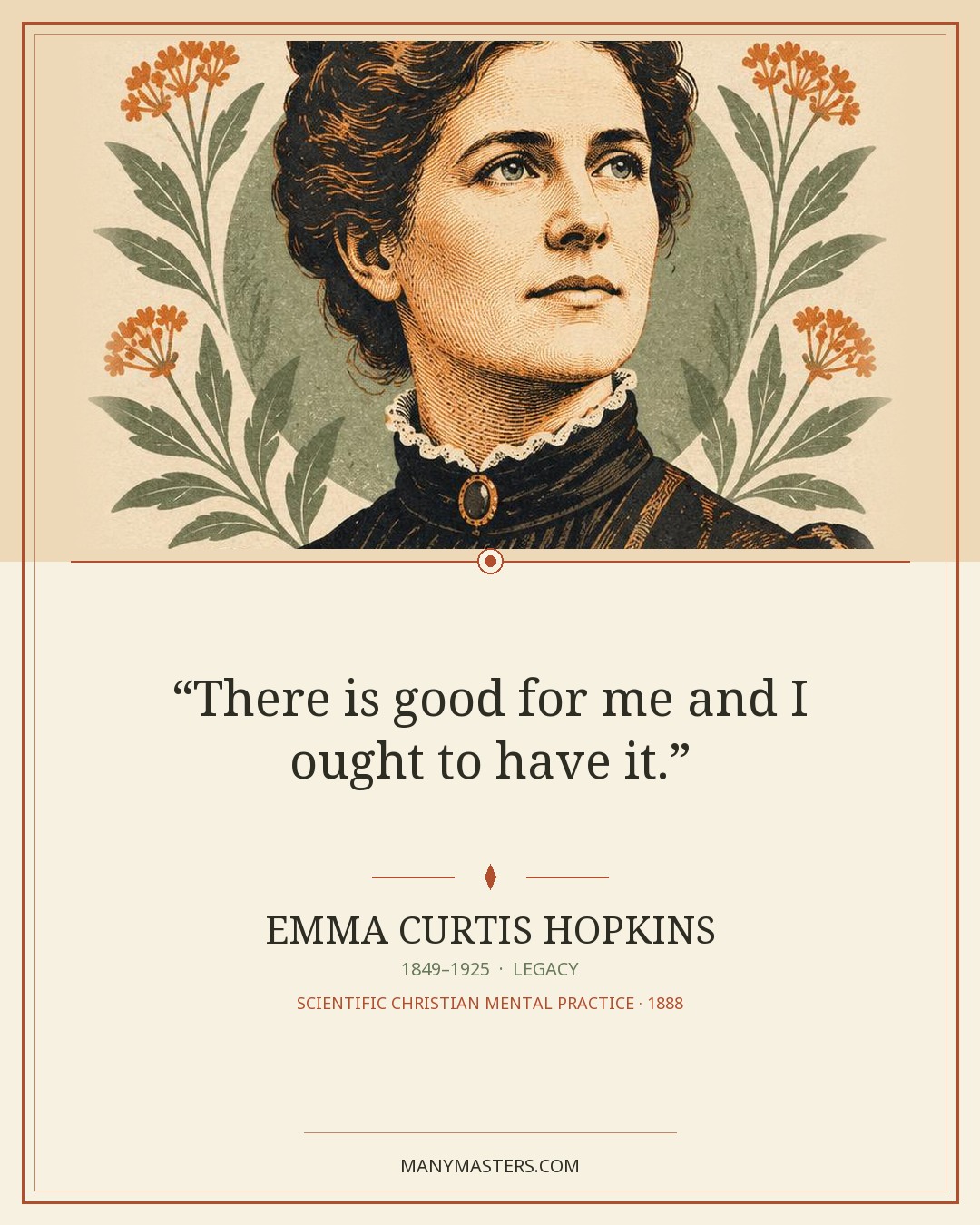
“There is good for me and I ought to have it.”
— Emma Curtis Hopkins, Scientific Christian Mental Practice (1888)
Why this master matters
Hopkins taught the teachers. The Fillmores, Ernest Holmes, Malinda Cramer and Annie Rix Militz all passed through her Chicago classroom, and she ordained hundreds of students — most of them women — at a time when almost no religious body would. Remove her and the map of this entire era falls apart.
Ideas in practice
Understand the teaching.
01
The high watch
Hold attention steadily on what you intend rather than on what alarms you. She treated attention as the fundamental spiritual discipline.
02
Denial and affirmation
A paired practice: release the claim you do not accept, then state the one you do. Order matters — clearing precedes building.
03
Train teachers, not followers
Her measure of success was students who could stand on their own, which is why her influence multiplied rather than concentrated.
Signature works
Start with the books.
Explore a short reading list, with purchasing links that support ManyMasters.
Start here
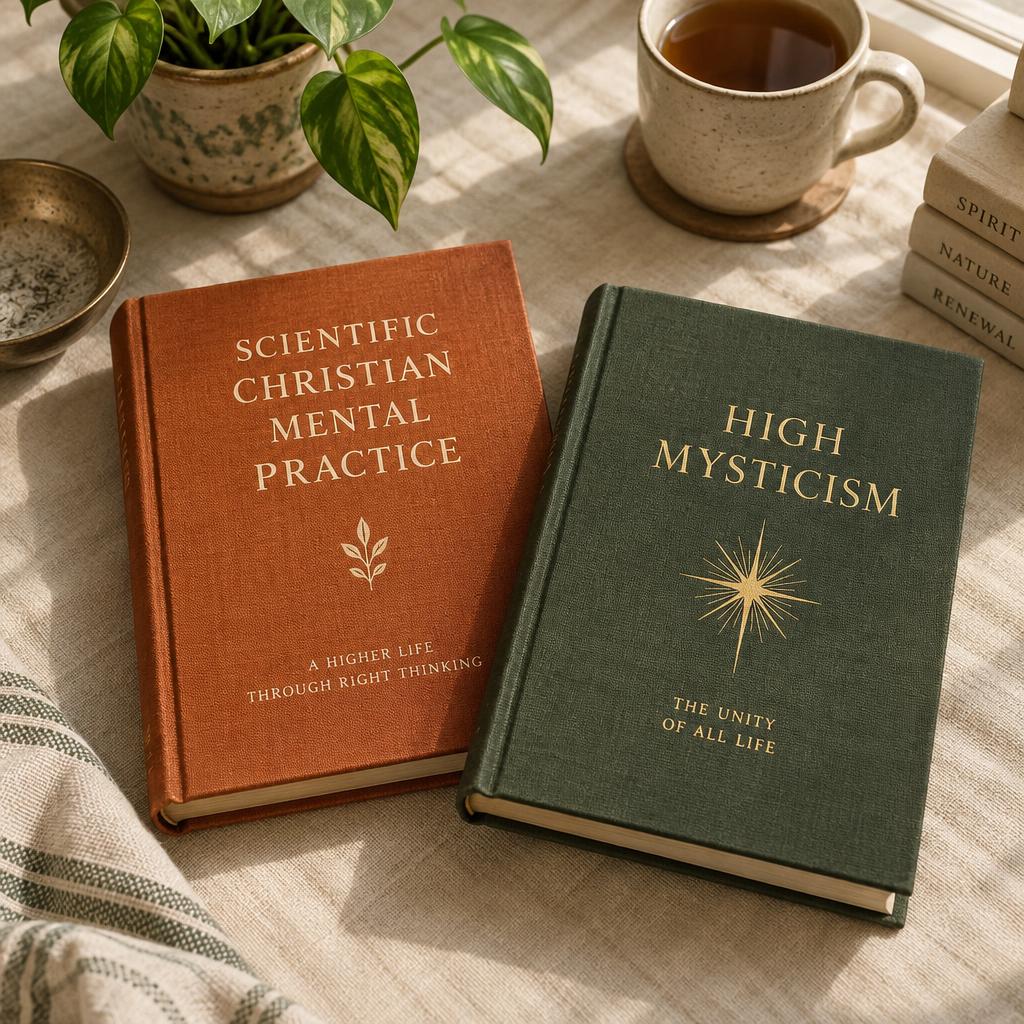
Scientific Christian Mental Practice
Her twelve-lesson course, written to be worked through rather than read once.
Explore editionsChoosing an edition
These titles are long out of copyright, so editions range from careful annotated reprints to hasty print-on-demand scans. Before buying, check that the listing names a publisher, shows a readable interior sample, and keeps the original chapter structure intact.
Affiliate disclosure: ManyMasters may earn a commission from qualifying purchases, at no additional cost to you.
Choose your path
Read for what you need now.
Historical context
This work belongs to the late-nineteenth and early-twentieth century New Thought movement. Read it as historical writing on belief, attention and character rather than as medical, psychological or financial advice, and treat the biographical stories that grew up around these figures as tradition rather than documented fact.