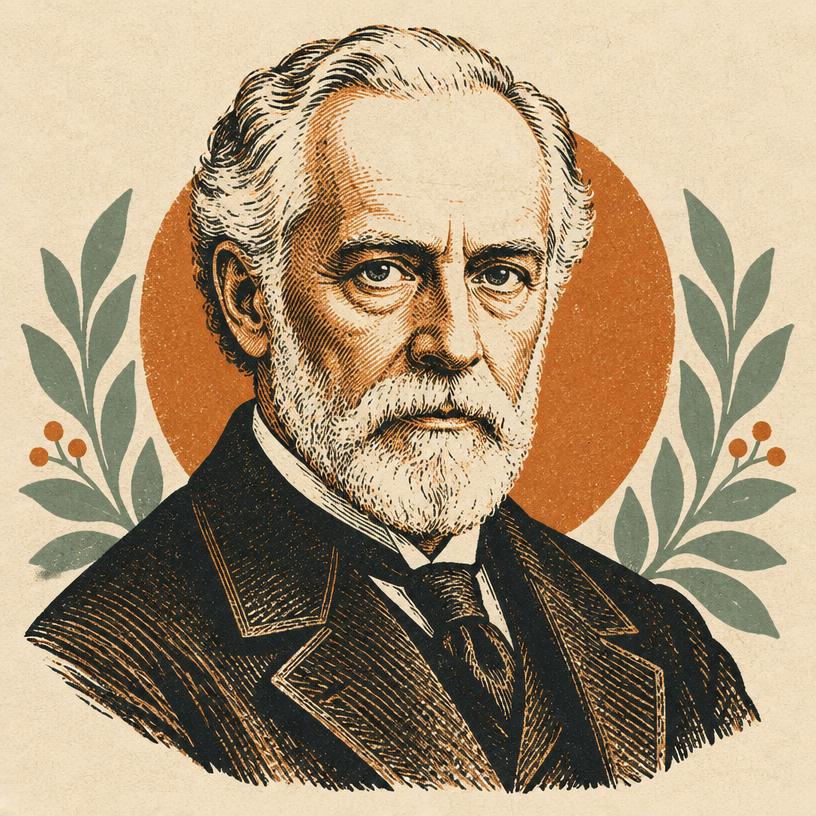
Original editorial artwork; not a historical photograph.
Legacy · 1847–1916
Thomas Troward
A retired British judge whose lectures gave New Thought its most rigorous philosophical spine.
Troward served as a divisional judge in India, studied comparative religion, and on retirement delivered the Edinburgh Lectures on Mental Science. His argument was structured like a legal brief: premises, inference, conclusion.
Ernest Holmes, Genevieve Behrend, and a long line of later teachers cite him as the thinker who made the ideas defensible.
1904
Edinburgh Lectures
25
years as a judge in India
Teacher
of Ernest Holmes
Ideas associated with the work
- Law and personality in balance
- Subjective and objective mind
- Reasoning from principle
- Creative thought as orderly, not magical
Start with the most famous book
The Edinburgh Lectures on Mental Science
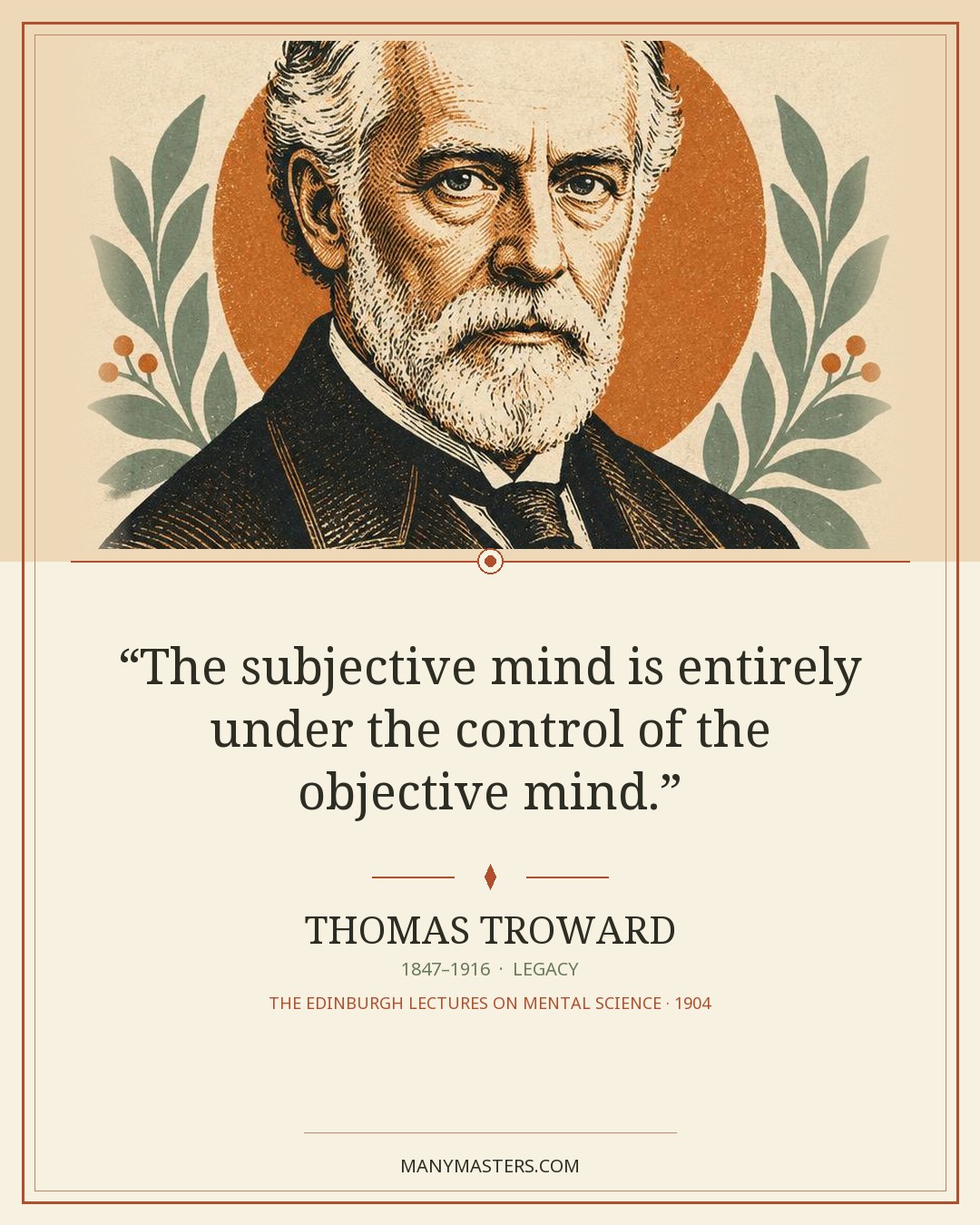
“The subjective mind is entirely under the control of the objective mind.”
— Thomas Troward, The Edinburgh Lectures on Mental Science (1904)
Why this master matters
Troward was a British judge in India who brought legal rigour to metaphysics. Ernest Holmes built Religious Science on his framework, and readers who find the rest of the tradition too loose usually find their footing here.
Ideas in practice
Understand the teaching.
01
Objective and subjective mind
Conscious choice sets direction; the deeper mind executes. Most failures, in his reading, come from giving contradictory instructions.
02
Law, not favour
Troward argues these principles operate impersonally, like physics — which removes both magic and pleading from the practice.
03
Reason it through
He asks the reader to follow an argument rather than accept an assertion, which is why he aged better than most of his contemporaries.
Signature works
Start with the books.
Explore a short reading list, with purchasing links that support ManyMasters.
Start here
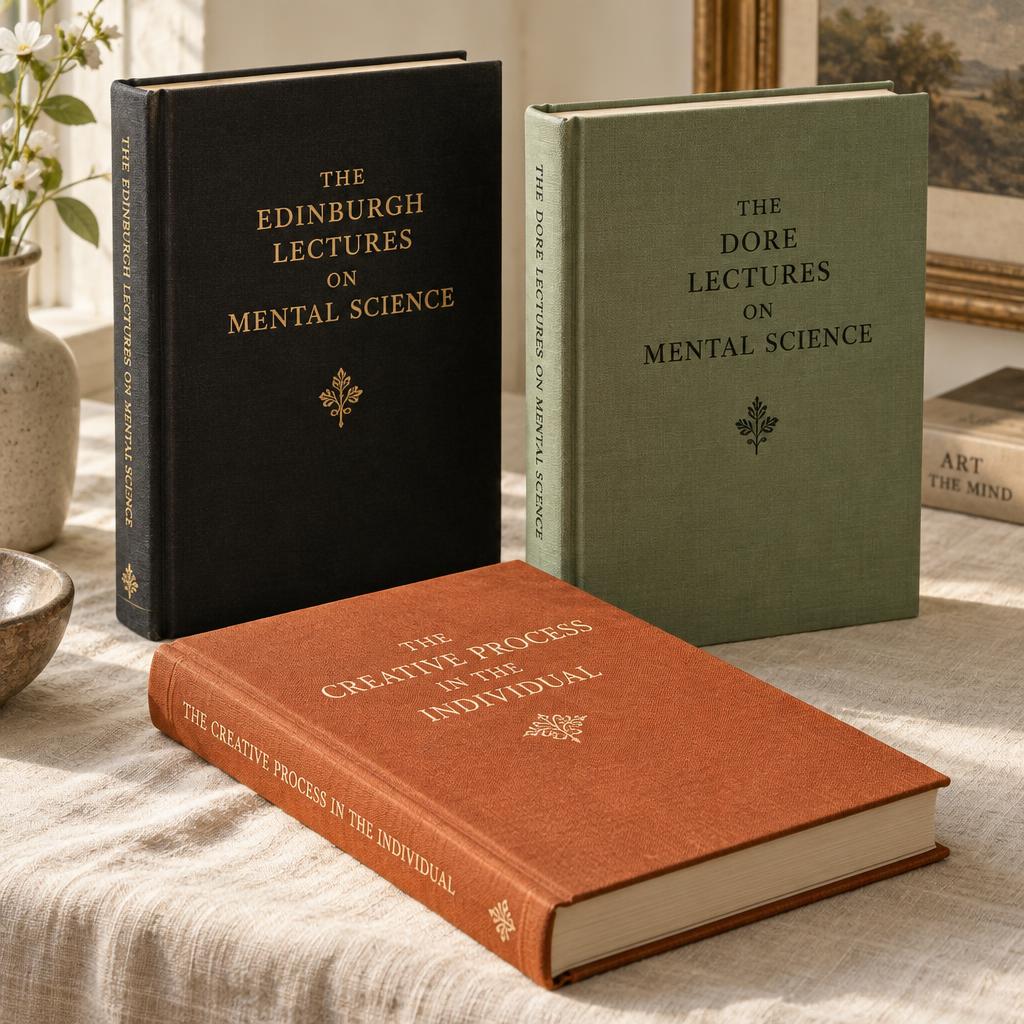
The Edinburgh Lectures on Mental Science
His most structured work — a tight argument rather than a set of exhortations.
Explore editionsChoosing an edition
These titles are long out of copyright, so editions range from careful annotated reprints to hasty print-on-demand scans. Before buying, check that the listing names a publisher, shows a readable interior sample, and keeps the original chapter structure intact.
Affiliate disclosure: ManyMasters may earn a commission from qualifying purchases, at no additional cost to you.
Choose your path
Read for what you need now.
Historical context
This work belongs to the late-nineteenth and early-twentieth century New Thought movement. Read it as historical writing on belief, attention and character rather than as medical, psychological or financial advice, and treat the biographical stories that grew up around these figures as tradition rather than documented fact.