
Original editorial artwork; not a historical photograph.
Legacy · 1905–1972
Neville Goddard
A Barbadian-born dancer turned lecturer whose teaching on imagination has found its largest audience long after his death.
Neville came to New York as a dancer, met an Ethiopian teacher he called Abdullah, and spent forty years lecturing on imagination as the creative power and on scripture as psychological drama rather than history.
He published more than ten books and left hundreds of recorded lectures, which circulate widely today.
10+
books published
100s
of recorded lectures
1944
Feeling Is the Secret
Ideas associated with the work
- Imagination creates reality
- Assume the feeling of the wish fulfilled
- Living in the end
- Scripture as inner psychology
Start with the most famous book
The Power of Awareness
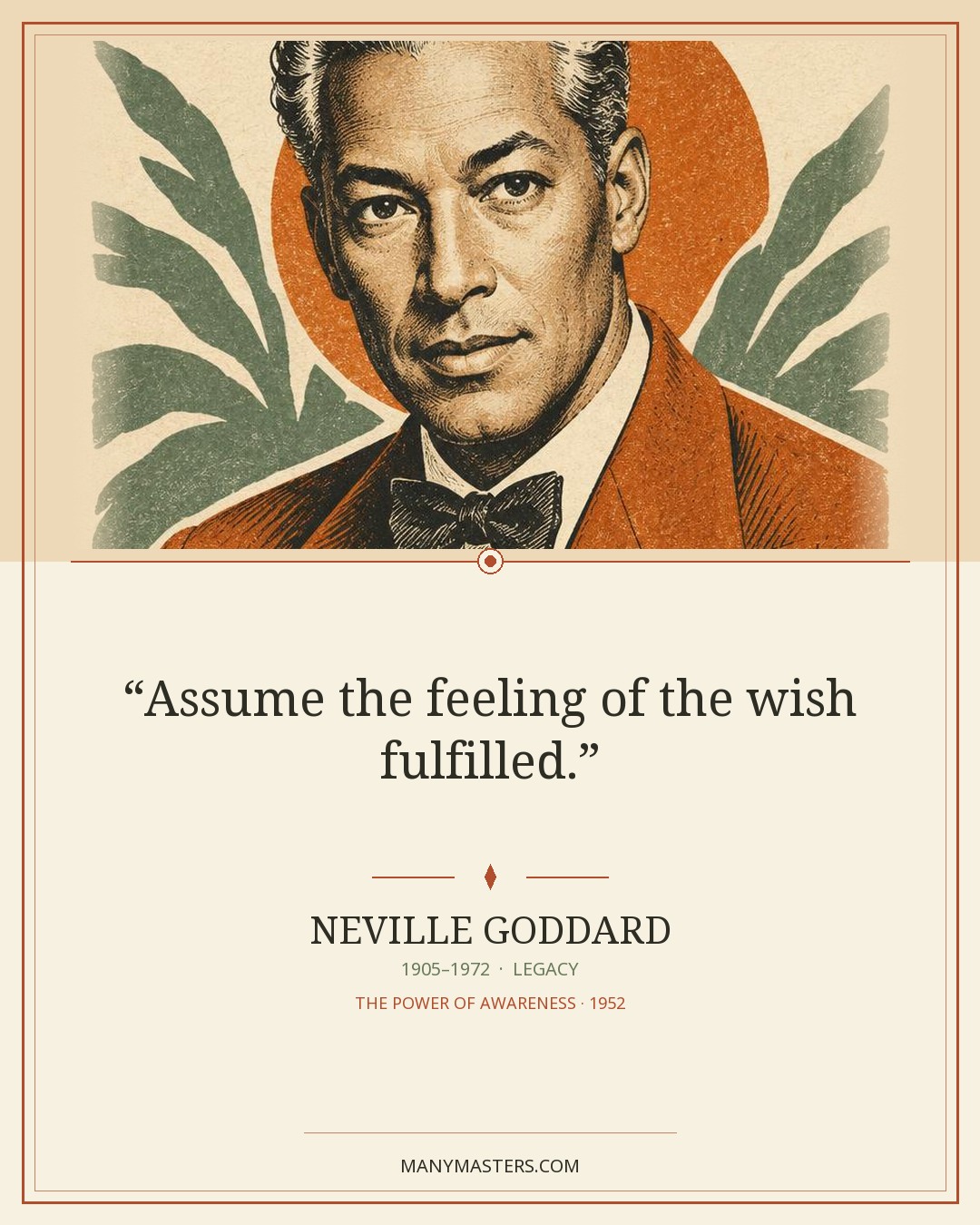
“Assume the feeling of the wish fulfilled.”
— Neville Goddard, The Power of Awareness (1952)
Why this master matters
Neville is the most rigorous imaginative teacher in the tradition and the one with the largest modern following. His single technique — occupy the end state in feeling — is repeated across contemporary manifestation culture, usually without credit.
Ideas in practice
Understand the teaching.
01
Feeling is the secret
The imagined scene works, in his account, only when it carries the emotional tone of already having it.
02
Live from the end
Act, speak and decide from the standpoint of the outcome rather than reaching toward it.
03
Revision
Replay a bad episode of the day as you would have wanted it, before sleep. His most distinctive practice.
Signature works
Start with the books.
Explore a short reading list, with purchasing links that support ManyMasters.
Start here
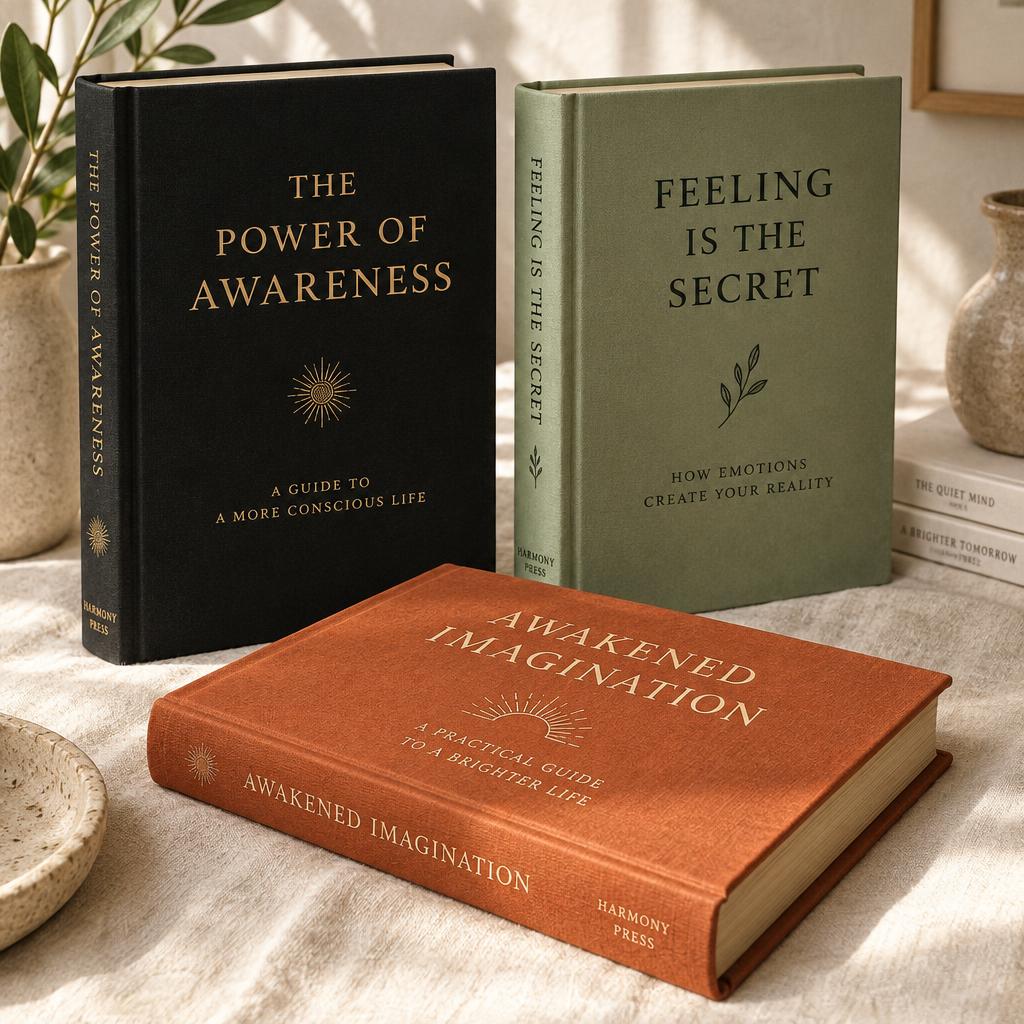
The Power of Awareness
His clearest complete statement: the premise, the method and the objections answered in one short book.
Explore editionsChoosing an edition
These titles are long out of copyright, so editions range from careful annotated reprints to hasty print-on-demand scans. Before buying, check that the listing names a publisher, shows a readable interior sample, and keeps the original chapter structure intact.
Affiliate disclosure: ManyMasters may earn a commission from qualifying purchases, at no additional cost to you.
Choose your path
Read for what you need now.
Historical context
This work belongs to the late-nineteenth and early-twentieth century New Thought movement. Read it as historical writing on belief, attention and character rather than as medical, psychological or financial advice, and treat the biographical stories that grew up around these figures as tradition rather than documented fact.