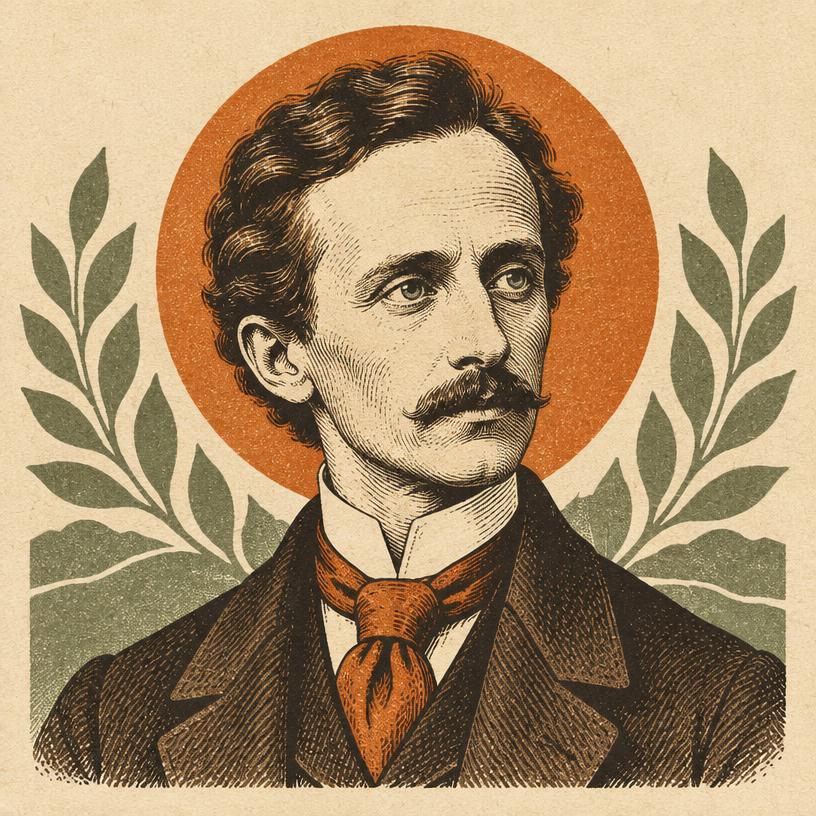
Original editorial artwork; not a historical photograph.
Legacy · 1864–1912
James Allen
The English writer whose slim meditation on thought and character became one of the most quoted books in the field.
Allen left school at fifteen after his father's death and worked as a private secretary before retiring at thirty-eight to a cottage in Ilfracombe, where he wrote each morning and lived simply until his death at forty-seven.
As a Man Thinketh runs to a few thousand words and has been continuously in print since 1903.
1903
As a Man Thinketh
19
books in nine years
47
years of life
Ideas associated with the work
- Thought shapes character
- Circumstance as an outgrowth of mind
- Calmness as strength
- Daily discipline over inspiration
Start with the most famous book
As a Man Thinketh
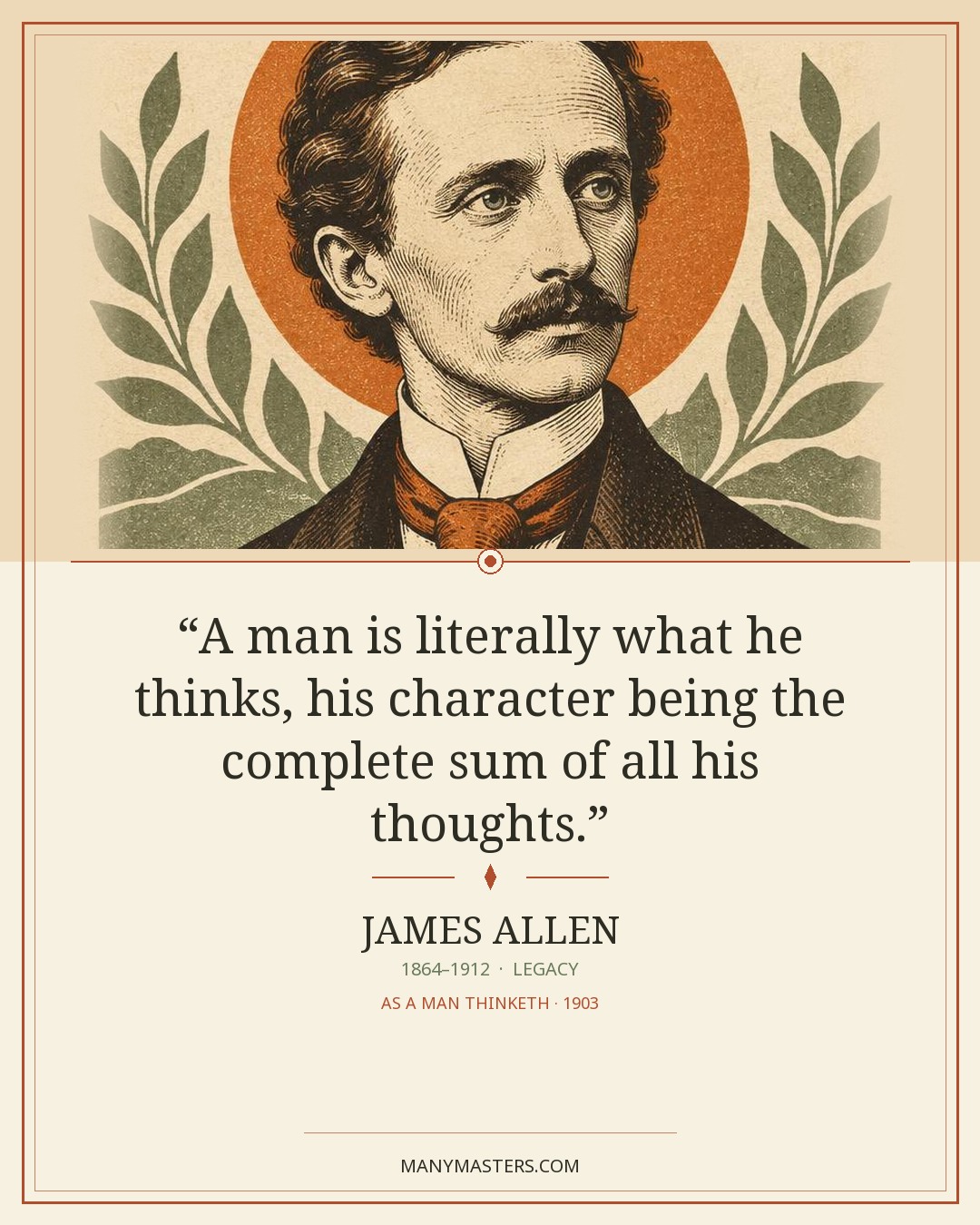
“A man is literally what he thinks, his character being the complete sum of all his thoughts.”
— James Allen, As a Man Thinketh (1903)
Why this master matters
As a Man Thinketh is barely twenty pages and has outsold most of the library around it. Allen lived what he wrote — leaving business for a modest cottage in Ilfracombe to write each morning — and the book's compression is why it still circulates.
Ideas in practice
Understand the teaching.
01
Thought builds character
Not a single dramatic decision but the accumulation of habitual thought is what forms a life.
02
Circumstance reveals
Allen's hardest claim: conditions tend to reflect the mind that maintains them. Read it as a prompt for responsibility, not blame.
03
Serenity is earned
His closing chapter treats calmness as the mature fruit of self-control, not a temperament you are born with.
Signature works
Start with the books.
Explore a short reading list, with purchasing links that support ManyMasters.
Start here
As a Man Thinketh
The most concentrated statement in the tradition. Twenty minutes to read, decades to work through.
Explore editionsChoosing an edition
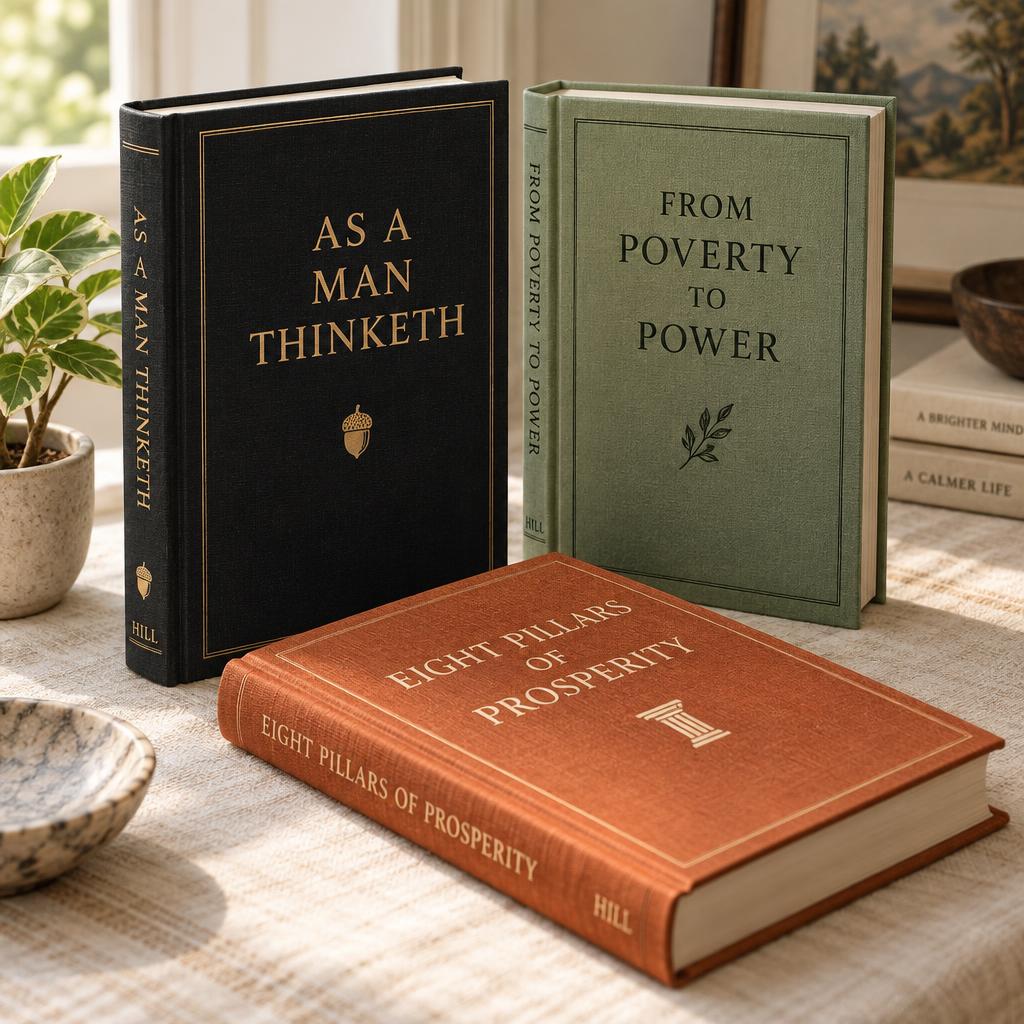
As a Man Thinketh is public domain and padded editions abound. Prefer a collected volume that also includes Eight Pillars of Prosperity or The Mastery of Destiny — better value and better typesetting than a twenty-page reprint.
Affiliate disclosure: ManyMasters may earn a commission from qualifying purchases, at no additional cost to you.
Choose your path
Read for what you need now.
Historical context
This work belongs to the late-nineteenth and early-twentieth century New Thought movement. Read it as historical writing on belief, attention and character rather than as medical, psychological or financial advice, and treat the biographical stories that grew up around these figures as tradition rather than documented fact.