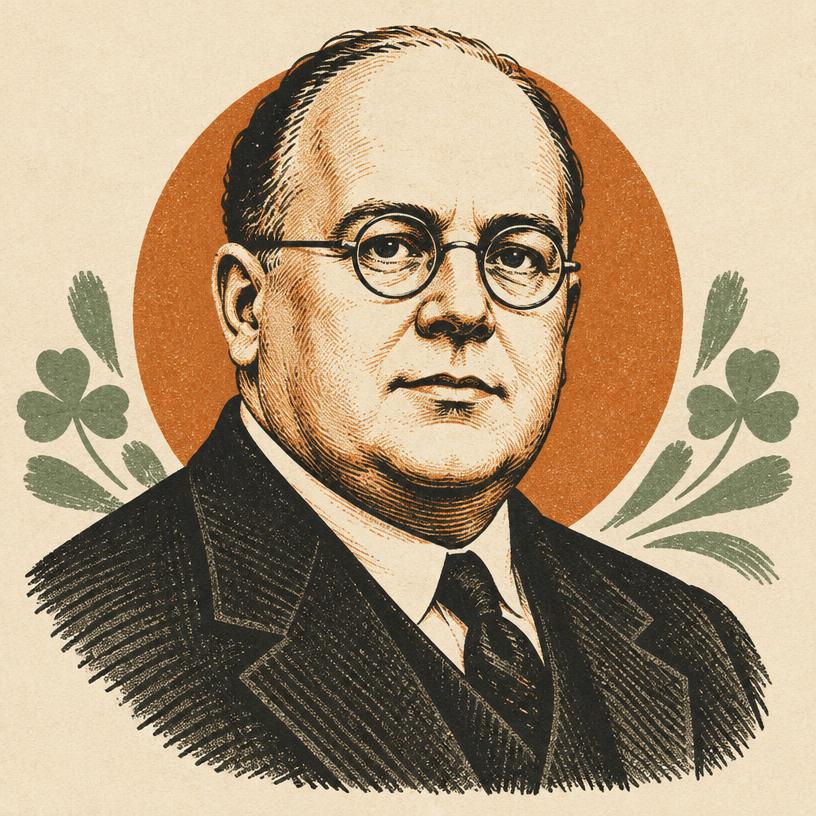
Original editorial artwork; not a historical photograph.
Legacy · 1886–1951
Emmet Fox
The Irish-born minister who filled the largest halls in New York and shaped early recovery literature.
Trained as an electrical engineer, Fox turned to Divine Science ministry and drew crowds of thousands to Carnegie Hall and the Hippodrome through the Depression years.
His pamphlet on the Sermon on the Mount circulated widely among early Alcoholics Anonymous members, giving his work an afterlife well outside metaphysical circles.
5,000+
typical audience
1934
The Sermon on the Mount
AA
early reading list staple
Ideas associated with the work
- The Golden Key of turning attention
- Scientific prayer
- Scripture as spiritual psychology
- Mental equivalents
Start with the most famous book
The Sermon on the Mount
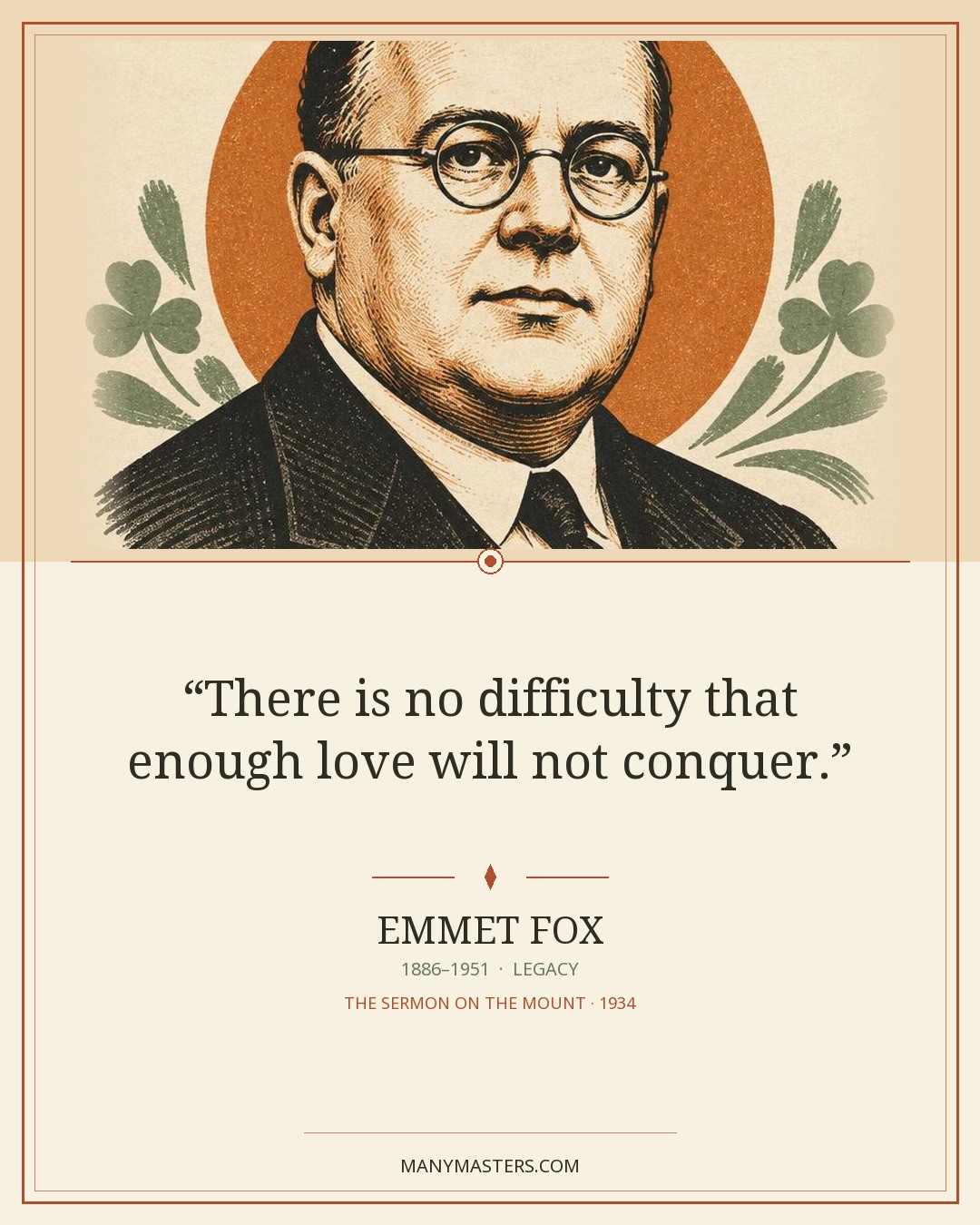
“There is no difficulty that enough love will not conquer.”
— Emmet Fox, The Sermon on the Mount (1934)
Why this master matters
Fox filled New York's largest halls during the Depression and his writing shaped the early literature of Alcoholics Anonymous. He is the movement's great popular preacher: metaphysics delivered as consolation to people who badly needed it.
Ideas in practice
Understand the teaching.
01
The Golden Key
When a problem grips you, deliberately turn attention from the problem to the divine. His most famous and most portable instruction.
02
Scripture read inwardly
Fox treats biblical stories as maps of states of mind rather than only as history.
03
Love as method
He presents love as the practical solvent for conflict, not as sentiment.
Signature works
Start with the books.
Explore a short reading list, with purchasing links that support ManyMasters.
Start here
The Sermon on the Mount
His masterwork — a metaphysical reading of the Gospels that has never been out of print.
Explore editionsChoosing an edition
These titles are long out of copyright, so editions range from careful annotated reprints to hasty print-on-demand scans. Before buying, check that the listing names a publisher, shows a readable interior sample, and keeps the original chapter structure intact.

Affiliate disclosure: ManyMasters may earn a commission from qualifying purchases, at no additional cost to you.
Choose your path
Read for what you need now.
Historical context
This work belongs to the late-nineteenth and early-twentieth century New Thought movement. Read it as historical writing on belief, attention and character rather than as medical, psychological or financial advice, and treat the biographical stories that grew up around these figures as tradition rather than documented fact.