
Original editorial artwork; not a historical photograph.
Legacy · 1871–1940
Florence Scovel Shinn
An illustrator turned metaphysical teacher whose aphoristic books have never gone out of print.
Shinn worked as a magazine illustrator in Philadelphia and New York before turning to teaching. She self-published The Game of Life and How to Play It in 1925 after publishers passed on it.
Her style was anecdotal and memorable — short stories, spoken affirmations, and lines that readers quote from memory a century later.
1925
The Game of Life
4
books, all still in print
Self
published from the start
Ideas associated with the work
- The spoken word as a tool
- Divine design for each life
- Nonresistance
- Intuition as practical guidance
Start with the most famous book
The Game of Life and How to Play It
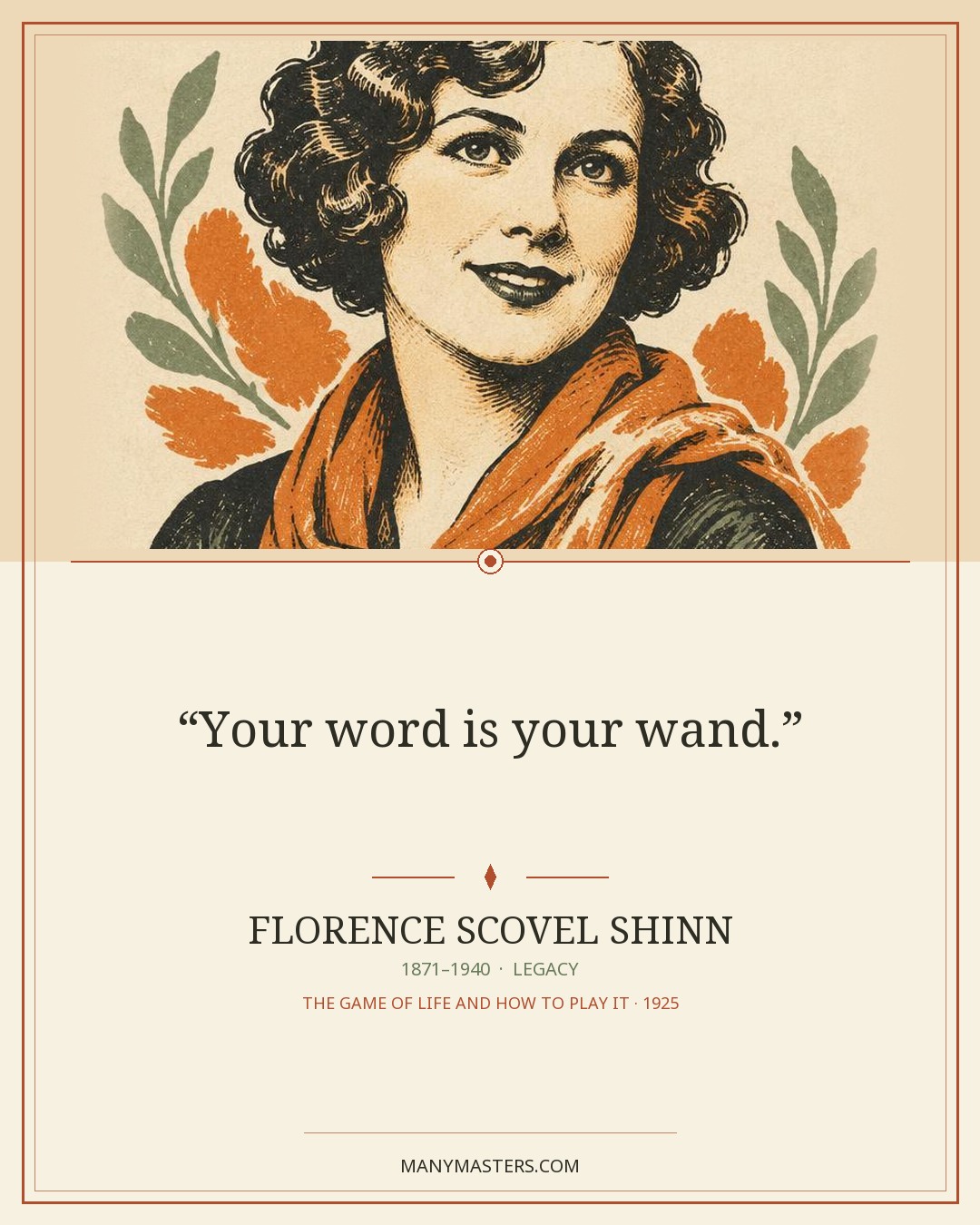
“Your word is your wand.”
— Florence Scovel Shinn, The Game of Life and How to Play It (1925)
Why this master matters
Shinn was a successful illustrator who wrote the tradition's most quotable books. Her short, story-driven chapters made metaphysics feel usable, and her phrases are still repeated by teachers who have never read her.
Ideas in practice
Understand the teaching.
01
Words are instructions
Shinn treats casual speech as consequential. Offhand phrases like 'I never win anything' are, in her framing, orders you are giving yourself.
02
The divine design
Each person has work that is genuinely theirs; much frustration comes from chasing someone else's.
03
Nonresistance
Fighting a situation fixes attention on it. She teaches releasing the grip as the active move, not the passive one.
Signature works
Start with the books.
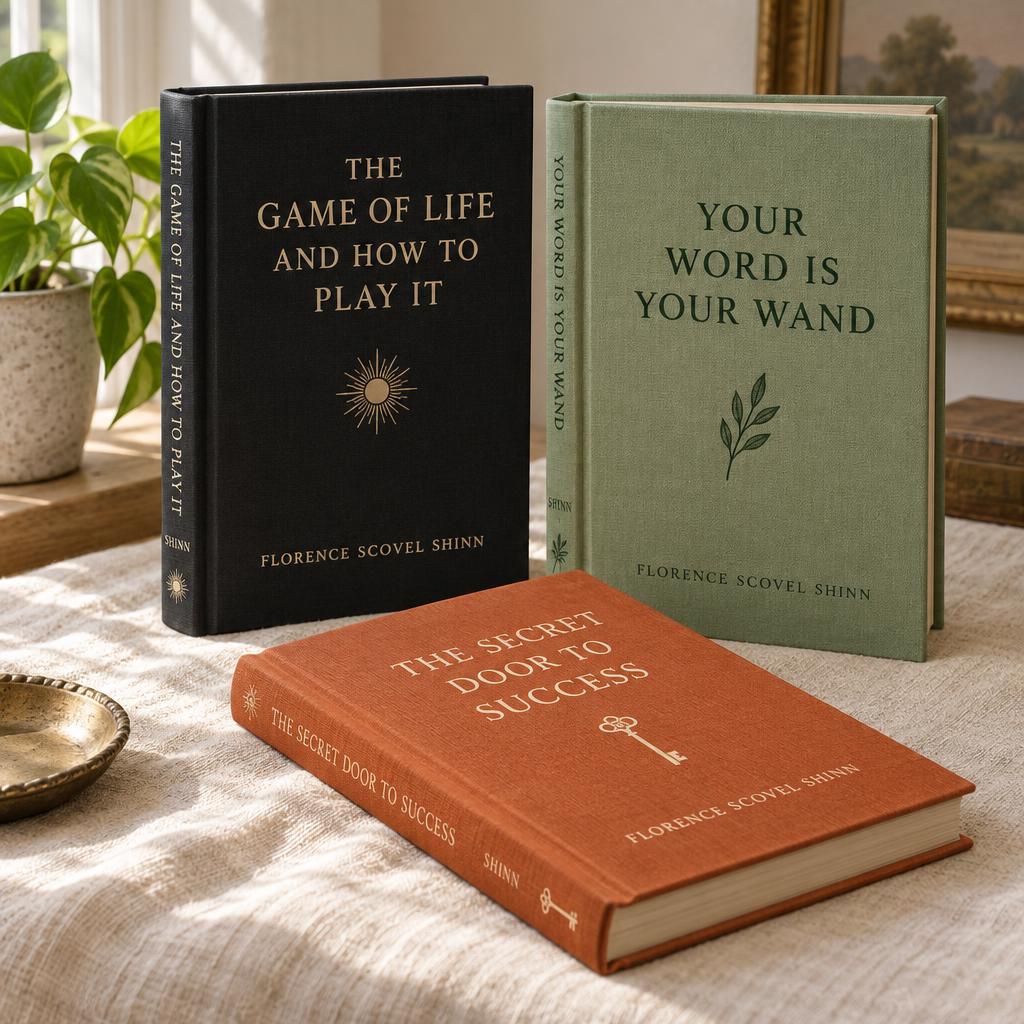
Explore a short reading list, with purchasing links that support ManyMasters.
Start here
The Game of Life and How to Play It
Brisk, funny and quotable — the friendliest doorway into the whole Legacy era.
Explore editionsChoosing an edition
These titles are long out of copyright, so editions range from careful annotated reprints to hasty print-on-demand scans. Before buying, check that the listing names a publisher, shows a readable interior sample, and keeps the original chapter structure intact.
Affiliate disclosure: ManyMasters may earn a commission from qualifying purchases, at no additional cost to you.
Choose your path
Read for what you need now.
Historical context
This work belongs to the late-nineteenth and early-twentieth century New Thought movement. Read it as historical writing on belief, attention and character rather than as medical, psychological or financial advice, and treat the biographical stories that grew up around these figures as tradition rather than documented fact.