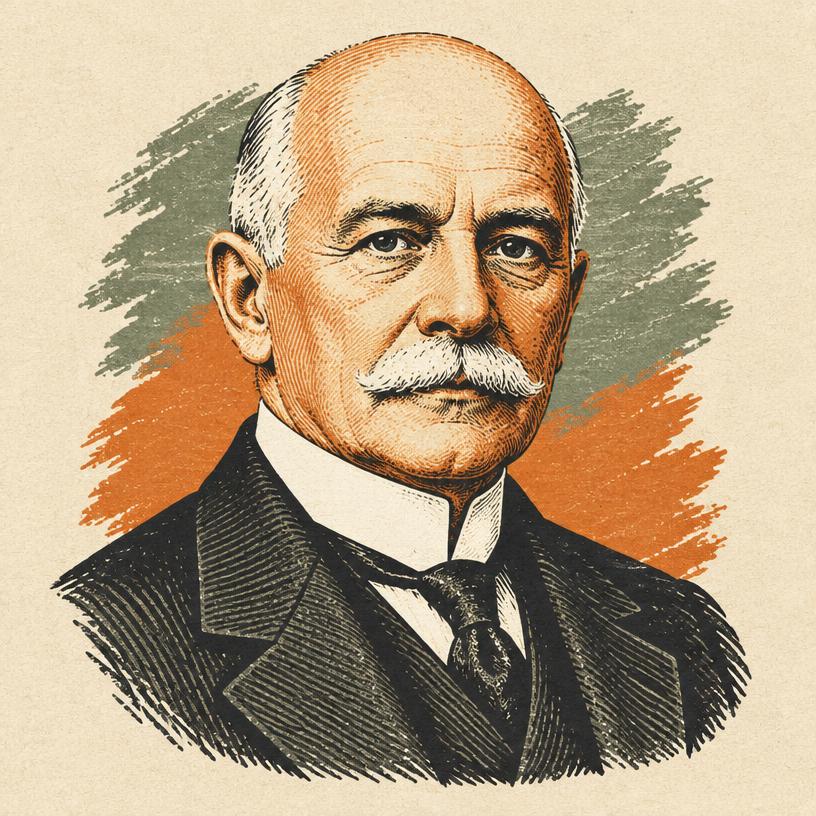
Original editorial artwork; not a historical photograph.
Legacy · 1866–1949
Charles F. Haanel
A St. Louis businessman who packaged mental training as a twenty-four-week correspondence course.
Haanel ran manufacturing companies before writing The Master Key System, sold by mail as a lesson per week with exercises to be practiced before the next arrived.
The course's structure — read, practice, wait — gave it a rigor unusual in the genre, and it has been reissued continuously since its 1912 appearance.
1912
The Master Key System
24
weekly lessons
order course format
Ideas associated with the work
- Concentration trained in weekly steps
- Constructive thought
- Harmony between inner and outer
- Practice before progression
Start with the most famous book
The Master Key System
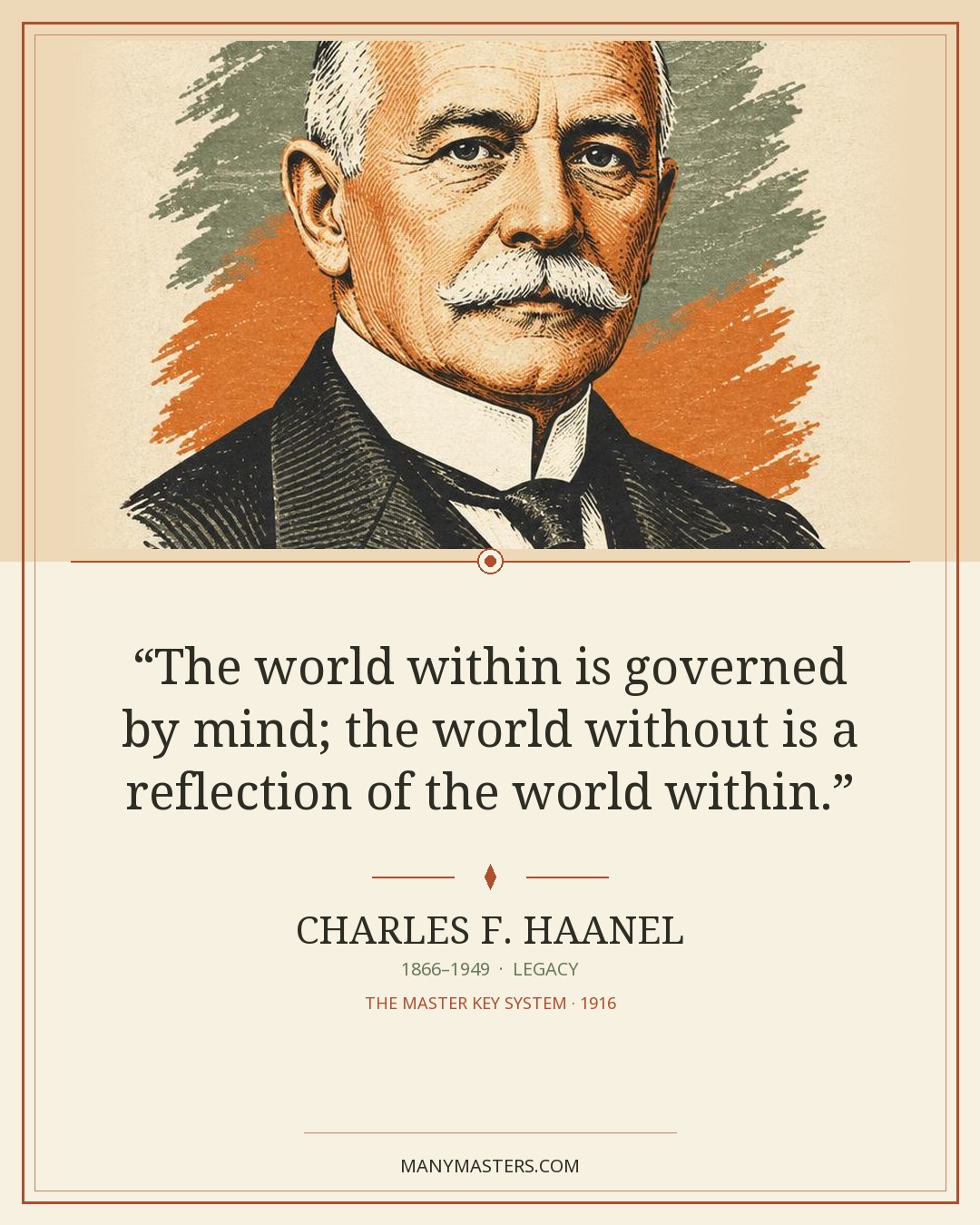
“The world within is governed by mind; the world without is a reflection of the world within.”
— Charles F. Haanel, The Master Key System (1916)
Why this master matters
The Master Key System was sold as a twenty-four week correspondence course, one lesson at a time, and that structure is its genius — it is the tradition's most disciplined curriculum rather than another book of ideas.
Ideas in practice
Understand the teaching.
01
One lesson per week
Haanel forbade rushing ahead. The pacing is the method; the exercises need time to bite.
02
Concentration as the core skill
Early lessons ask only for stillness and sustained attention, on the grounds that nothing else works without it.
03
Inner precedes outer
His opening claim, repeated and built on for twenty-four weeks until it becomes a habit of interpretation.
Signature works
Start with the books.
Explore a short reading list, with purchasing links that support ManyMasters.
Start here
The Master Key System
Twenty-four weekly lessons with exercises. Read as designed, it is a six-month course.
Explore editionsChoosing an edition
Look for an edition that keeps the original twenty-four parts with their numbered paragraphs and end-of-part questions — some modern reprints strip the exercises, which removes the point of the book.

Affiliate disclosure: ManyMasters may earn a commission from qualifying purchases, at no additional cost to you.
Choose your path
Read for what you need now.
Historical context
This work belongs to the late-nineteenth and early-twentieth century New Thought movement. Read it as historical writing on belief, attention and character rather than as medical, psychological or financial advice, and treat the biographical stories that grew up around these figures as tradition rather than documented fact.