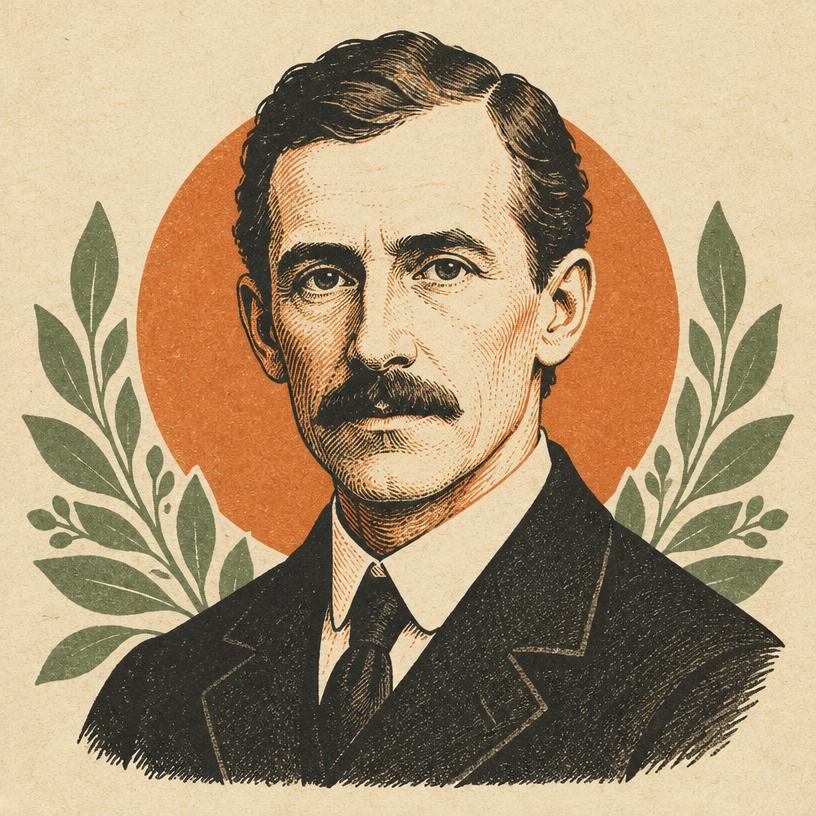
Original editorial artwork; not a historical photograph.
Legacy · 1860–1911
Wallace D. Wattles
Author of the short, unusually direct book on prosperity that still anchors the genre a century later.
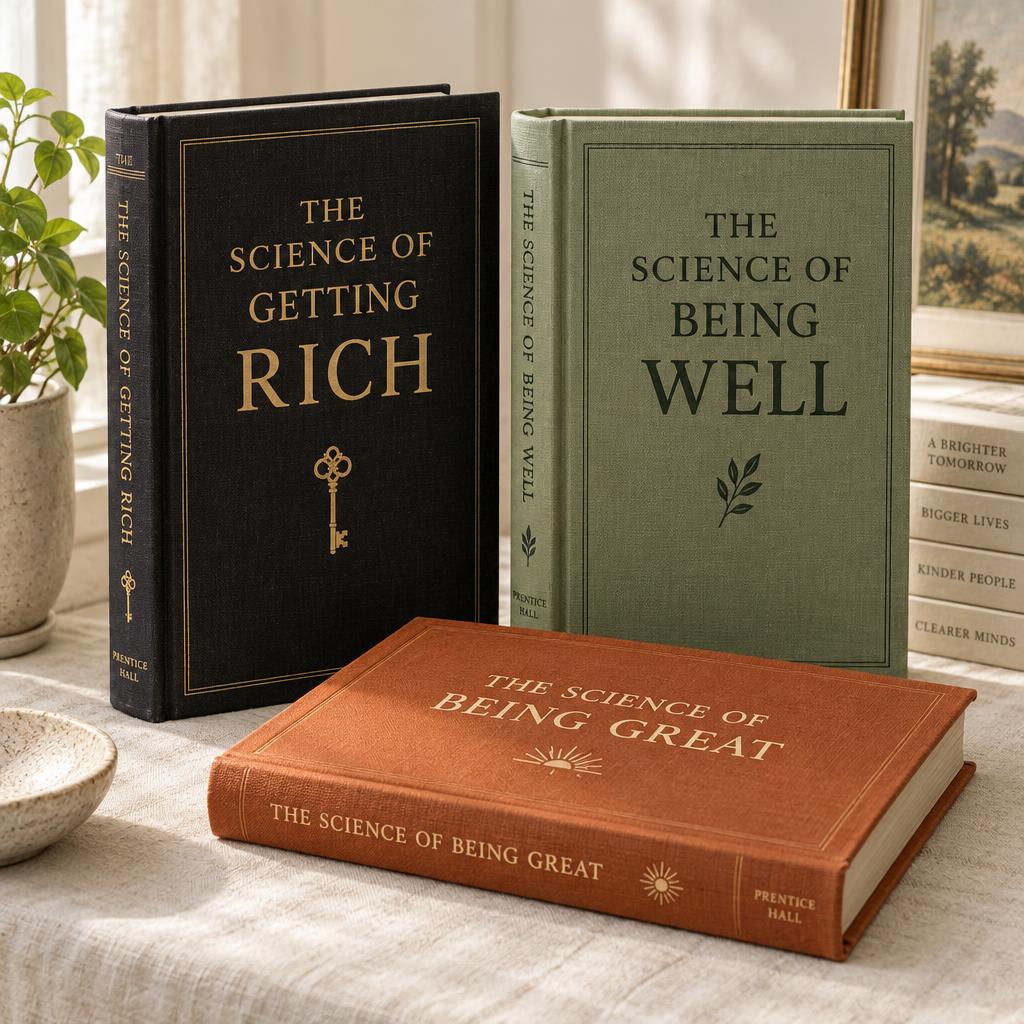
Wattles wrote from a background of poverty and social reform, publishing a trilogy on wealth, health, and greatness in the last years of a short life. The Science of Getting Rich is barely a hundred pages and makes no attempt at ornament.
The book resurfaced in the 2000s as the acknowledged source behind a wave of modern prosperity teaching.
1910
The Science of Getting Rich
3
books in the trilogy
100
pages, no padding
Ideas associated with the work
- Acting in a certain way
- Creation rather than competition
- Gratitude as a working posture
- Clear mental images held steadily
Start with the most famous book
The Science of Getting Rich
“There is a thinking stuff from which all things are made, and which, in its original state, permeates, penetrates, and fills the interspaces of the universe.”
— Wallace D. Wattles, The Science of Getting Rich (1910)
Why this master matters
The Science of Getting Rich is short, blunt and enormously influential — it is the book that launched Rhonda Byrne's The Secret nearly a century after publication, and it remains the most cited prosperity text in the tradition.
Ideas in practice
Understand the teaching.
01
Creation, not competition
Wattles' central distinction: build new value rather than fight over existing value. It reframes ambition as contribution.
02
Act in the certain way
Vision without daily efficient action is, in his framing, simply daydreaming.
03
Gratitude keeps the channel open
He treats gratitude as a working mental posture that keeps attention on abundance rather than lack.
Signature works
Start with the books.
Explore a short reading list, with purchasing links that support ManyMasters.
Start here
The Science of Getting Rich
Under a hundred pages, written in a 'certain way' of plain instruction. Read it in one sitting.
Explore editionsChoosing an edition
These titles are long out of copyright, so editions range from careful annotated reprints to hasty print-on-demand scans. Before buying, check that the listing names a publisher, shows a readable interior sample, and keeps the original chapter structure intact.
Affiliate disclosure: ManyMasters may earn a commission from qualifying purchases, at no additional cost to you.
Choose your path
Read for what you need now.
Historical context
This work belongs to the late-nineteenth and early-twentieth century New Thought movement. Read it as historical writing on belief, attention and character rather than as medical, psychological or financial advice, and treat the biographical stories that grew up around these figures as tradition rather than documented fact.