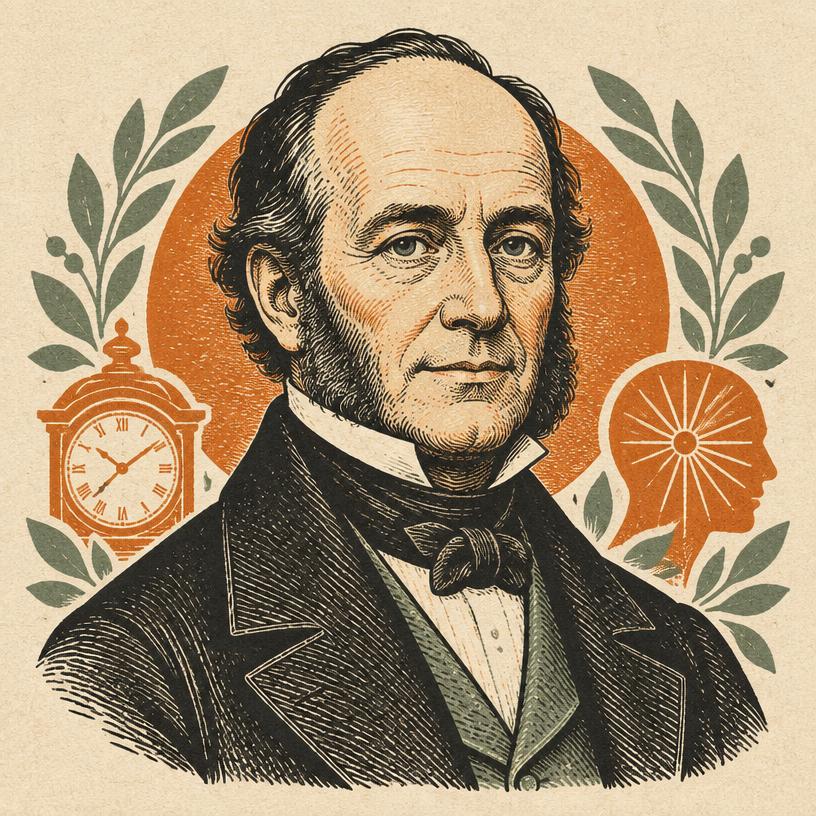
Original editorial artwork; not a historical photograph.
Legacy · 1802–1866
Phineas P. Quimby
The New England clockmaker and mental healer usually placed at the headwaters of the New Thought tradition.
Quimby worked as a mesmerist before concluding that the healing he observed came from changed belief rather than from magnetism. He spent his later years treating patients in Portland, Maine, and recording his observations in notebooks that circulated privately for decades.
Those notebooks shaped the students who followed him, and most later New Thought writers trace at least part of their vocabulary back to his work.
1859
Portland practice established
1,000s
patients seen
Source
of the New Thought line
Ideas associated with the work
- Belief as a factor in illness and recovery
- The mind as the seat of change
- Truth as a healing agent
- Teaching rather than treating
Start with the most famous book
The Quimby Manuscripts
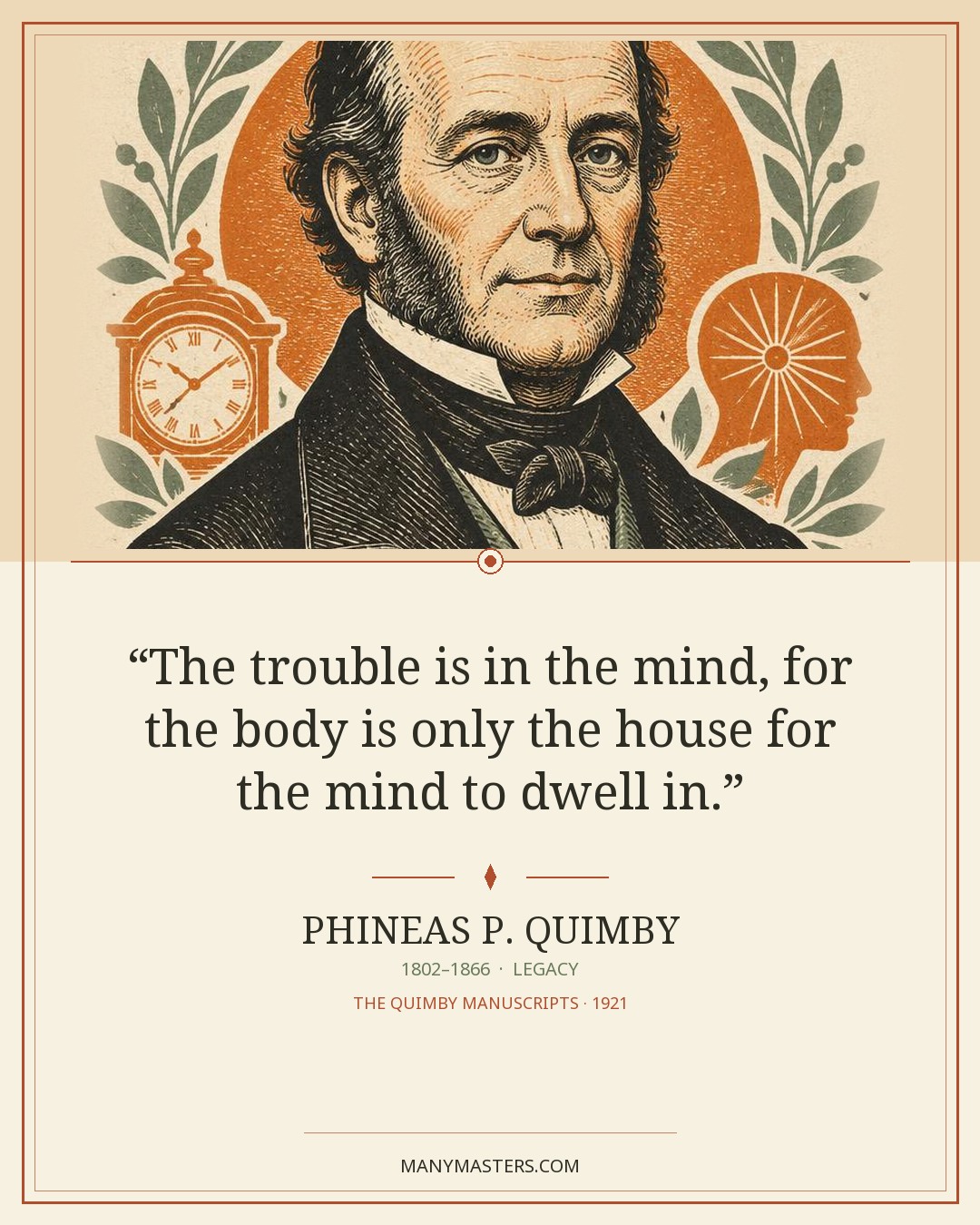
“The trouble is in the mind, for the body is only the house for the mind to dwell in.”
— Phineas P. Quimby, The Quimby Manuscripts (published 1921)
Why this master matters
Nearly every teacher who follows in this collection is downstream of Quimby. He was the first American to argue, in plain working language, that what a person believes about their condition shapes the condition itself — and to test that claim patient by patient for years before writing a word of theory.
Ideas in practice
Understand the teaching.
01
Belief is an ingredient, not a bystander
Quimby watched patients improve when their explanation of their own condition changed. Notice the story you repeat about a problem; it is part of the problem's material.
02
Explain rather than impress
He refused to mystify his patients. The aim of a session was understanding, because understanding is what held once the practitioner left the room.
03
The mind wears grooves
Repeated fear settles into habit. Repeated clarity does the same, which is why he treated practice as more important than insight.
Signature works
Start with the books.
Explore a short reading list, with purchasing links that support ManyMasters.
Start here
The Quimby Manuscripts
His own notebooks, collected after his death. Rough, repetitive and unmistakably first-hand — the closest thing to watching the tradition begin.
Explore editionsChoosing an edition
These titles are long out of copyright, so editions range from careful annotated reprints to hasty print-on-demand scans. Before buying, check that the listing names a publisher, shows a readable interior sample, and keeps the original chapter structure intact.

Affiliate disclosure: ManyMasters may earn a commission from qualifying purchases, at no additional cost to you.
Choose your path
Read for what you need now.
Historical context
This work belongs to the late-nineteenth and early-twentieth century New Thought movement. Read it as historical writing on belief, attention and character rather than as medical, psychological or financial advice, and treat the biographical stories that grew up around these figures as tradition rather than documented fact.