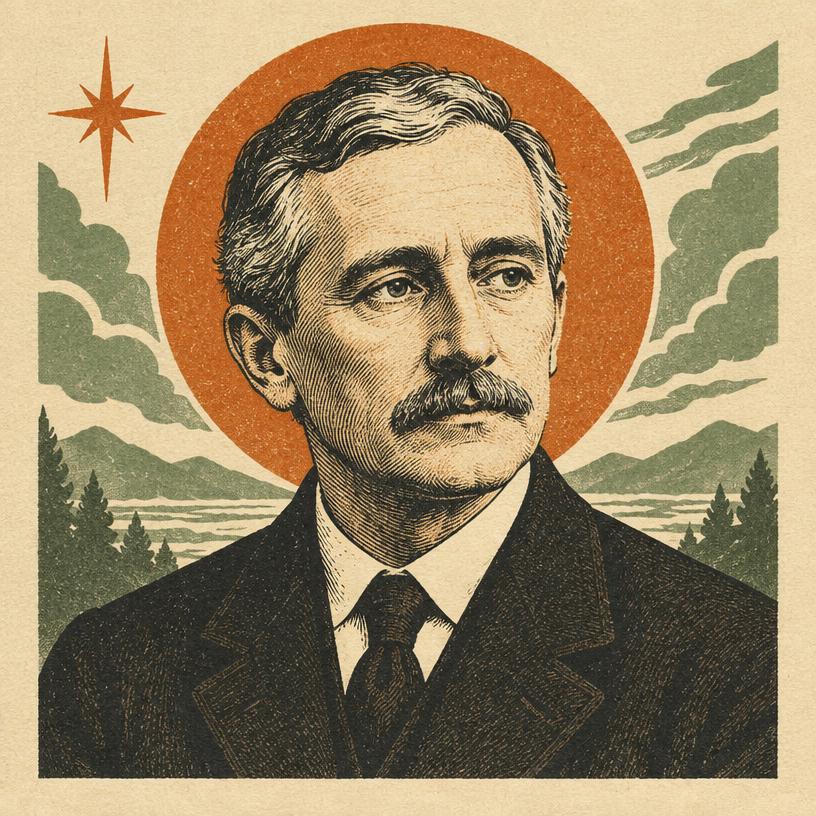
Original editorial artwork; not a historical photograph.
Legacy · 1872–1938
Joseph S. Benner
The anonymous author of a small 1914 book that has quietly influenced teachers for a century.
Benner published The Impersonal Life anonymously, writing in the voice of the inner I AM rather than as an author addressing a reader. He kept his name off the work throughout his life.
The book circulated privately for decades and has been named as a personal touchstone by figures well outside metaphysical circles, including Elvis Presley.
1914
The Impersonal Life
Anonymous
in his lifetime
I AM
the book's narrator
Ideas associated with the work
- The indwelling I AM
- Stillness as the door
- Impersonal rather than personal identity
- Direct address over instruction
Start with the most famous book
The Impersonal Life
Why this master matters
The Impersonal Life was published anonymously and travelled by word of mouth for decades — Elvis Presley reportedly gave copies away by the box. Benner's refusal to attach his name to it is part of why the book reads the way it does.
Ideas in practice
Understand the teaching.
01
The I AM within
Benner locates the divine as the reader's own deepest identity rather than as something external to reach.
02
Stillness first
His instruction is to stop, not to strive. The book keeps returning the reader to silence.
03
Anonymity as integrity
Publishing without a name kept attention on the message. The practice is worth considering in its own right.
Signature works
Start with the books.
Explore a short reading list, with purchasing links that support ManyMasters.
Start here
The Impersonal Life
Written in the voice of the inner self addressing the reader directly. Unlike anything else in the tradition.
Explore editionsChoosing an edition
These titles are long out of copyright, so editions range from careful annotated reprints to hasty print-on-demand scans. Before buying, check that the listing names a publisher, shows a readable interior sample, and keeps the original chapter structure intact.

Affiliate disclosure: ManyMasters may earn a commission from qualifying purchases, at no additional cost to you.
Choose your path
Read for what you need now.
Historical context
This work belongs to the late-nineteenth and early-twentieth century New Thought movement. Read it as historical writing on belief, attention and character rather than as medical, psychological or financial advice, and treat the biographical stories that grew up around these figures as tradition rather than documented fact.