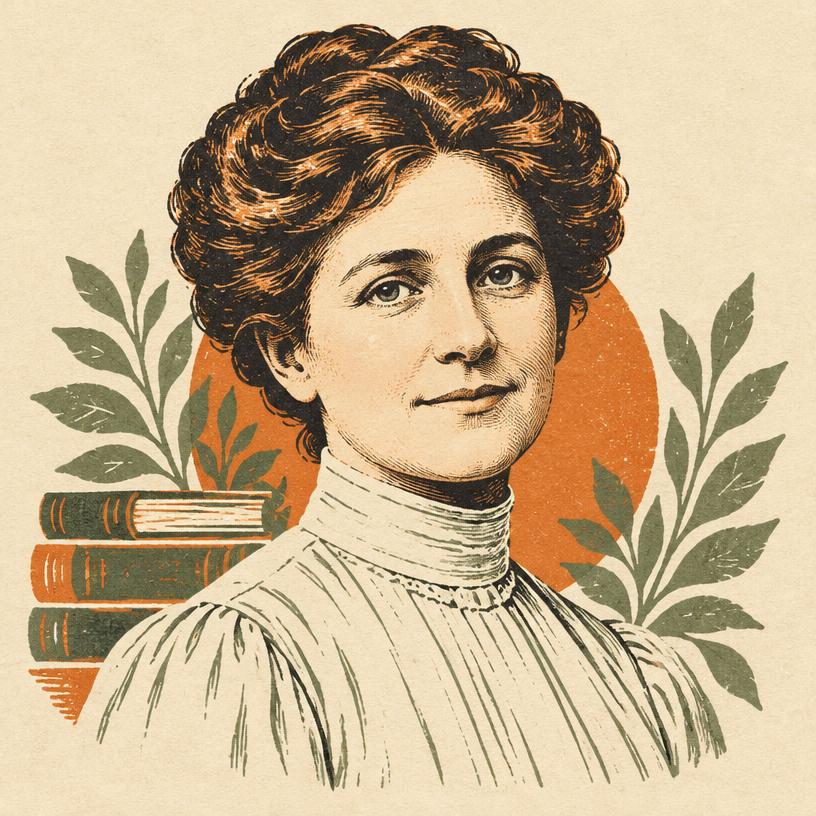
Original editorial artwork; not a historical photograph.
Legacy · 1856–1924
Annie Rix Militz
A Hopkins student who founded the Home of Truth and carried the teaching across the Pacific.
A San Francisco schoolteacher, Militz studied with Emma Curtis Hopkins and founded the Home of Truth centers in California, editing the magazine Master Mind for many years.
She traveled widely, teaching in Hawaii, Japan, and India, making her one of the movement's earliest international figures.
1887
Home of Truth founded
Master Mind
magazine editor
3
continents taught
Ideas associated with the work
- Practical Christianity
- Health and supply as one teaching
- Centers of practice, not congregations
- Teaching across cultures
Start with the most famous book
Primary Lessons in Christian Living and Healing
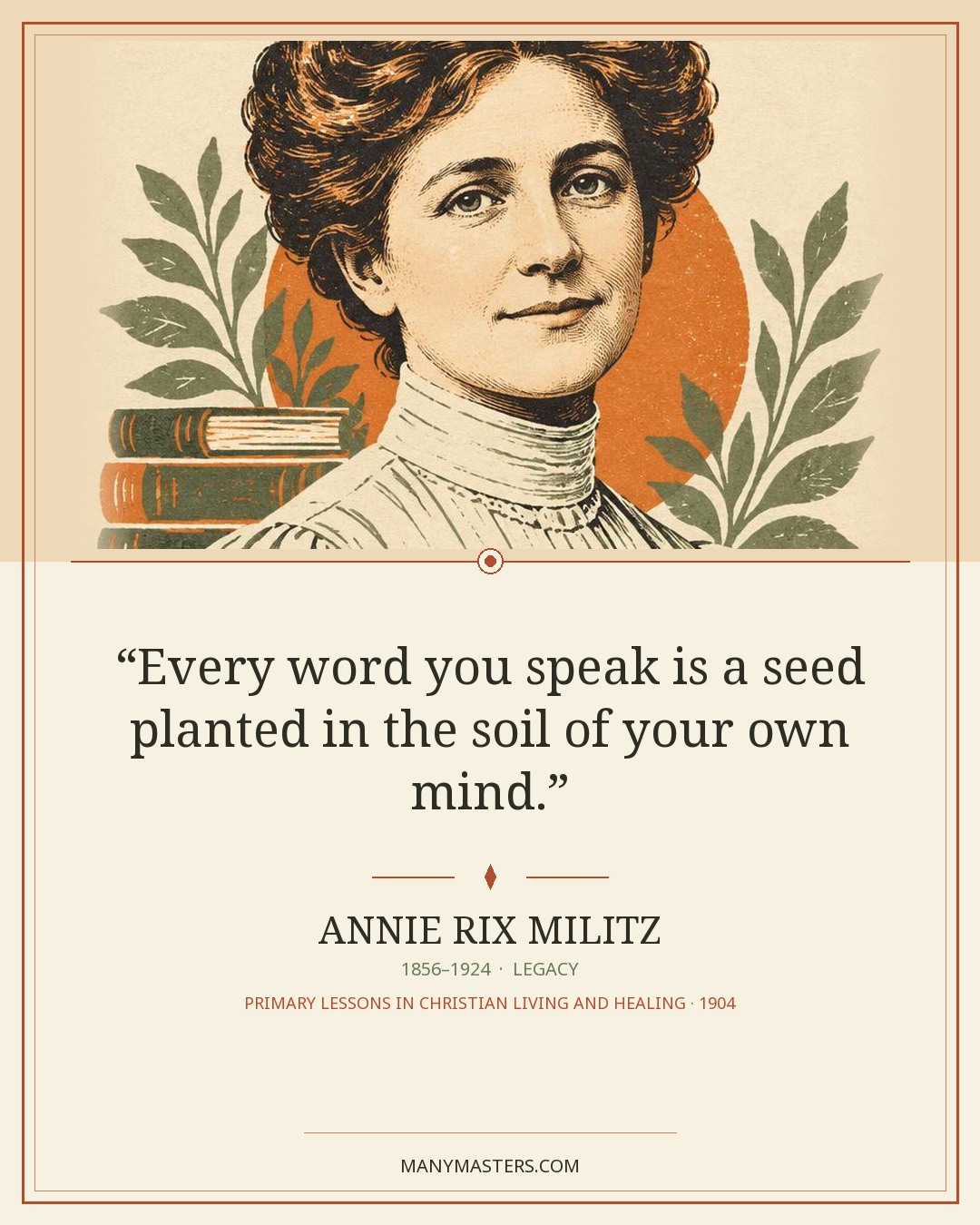
“Every word you speak is a seed planted in the soil of your own mind.”
— Annie Rix Militz, Primary Lessons in Christian Living and Healing (1904)
Why this master matters
A Hopkins student who founded the Homes of Truth across the American West and wrote widely used teaching manuals, Militz is one of the main reasons the movement took root on the Pacific coast.
Ideas in practice
Understand the teaching.
01
Teach in sequence
Her lessons build deliberately, each assuming the last, which makes them unusually easy to actually complete.
02
Community as container
The Homes of Truth gave students a place to practise together rather than alone.
03
Words as seeds
Careful speech is, for Militz, the beginner's discipline that everything else grows from.
Signature works
Start with the books.
Explore a short reading list, with purchasing links that support ManyMasters.
Start here
Primary Lessons in Christian Living and Healing
Her teaching manual — clear, sequential, and built for classroom use.
Explore editionsChoosing an edition
These titles are long out of copyright, so editions range from careful annotated reprints to hasty print-on-demand scans. Before buying, check that the listing names a publisher, shows a readable interior sample, and keeps the original chapter structure intact.

Affiliate disclosure: ManyMasters may earn a commission from qualifying purchases, at no additional cost to you.
Choose your path
Read for what you need now.
Historical context
This work belongs to the late-nineteenth and early-twentieth century New Thought movement. Read it as historical writing on belief, attention and character rather than as medical, psychological or financial advice, and treat the biographical stories that grew up around these figures as tradition rather than documented fact.