Ideas in Context · 3 min read
Stillness in a loud decade
Presence, awareness, and the older question of who is doing the thinking—read across three contemplative teachers.

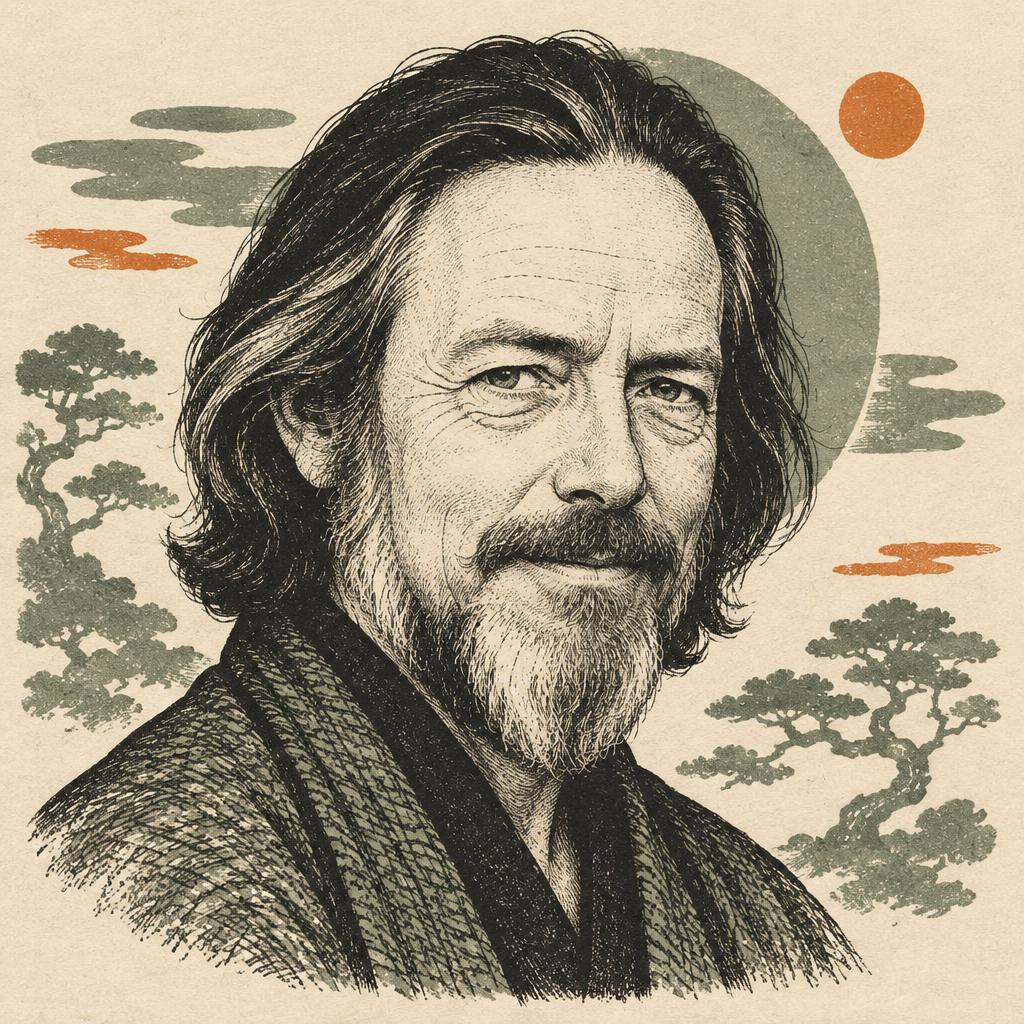

The contemplative strand of personal development asks a different question from the rest of the shelf. Not how to achieve more, but what remains when the striving pauses.
The present as a practice
Eckhart Tolle's central instruction is deceptively plain: attention placed in the current moment interrupts the commentary that generates most everyday suffering.
The difficulty is not understanding it. The difficulty is remembering it at three in the afternoon.
Playing the game lightly
Alan Watts translated Eastern philosophy for Western readers with wit and precision. His recurring point: the self we defend so strenuously is partly a convention.
Held well, the idea produces lightness rather than nihilism—effort without the clenching.
Watching the voice
Michael Singer offers the most operational version: you are not the inner narration; you are what notices it. Distance arrives before any argument with the thought.
Try one minute of listening to your thinking as though it were happening in the next room.
Stillness is not withdrawal
None of these teachers argue for disengagement. The claim is that action taken from a quieter place tends to be clearer, kinder, and less reactive.
The test of stillness is not how serene you feel alone. It is whether you return to the conversation less defended, make the difficult call without rehearsing an enemy, and notice another person's reality before protecting your own story.
Do not use presence to disappear
Tolle emphasizes release from psychological time. Watts loosens the fiction of the separate self. Singer trains disidentification from inner noise. They converge on spaciousness, but their language can be misused to float above grief, conflict, and responsibility.
If a spiritual idea asks you to deny anger before hearing what it protects, or to call injustice an illusion before confronting it, the practice has become anesthesia. Real presence does not make life less particular. It makes evasion harder.